
C10 Statement Mono DAC
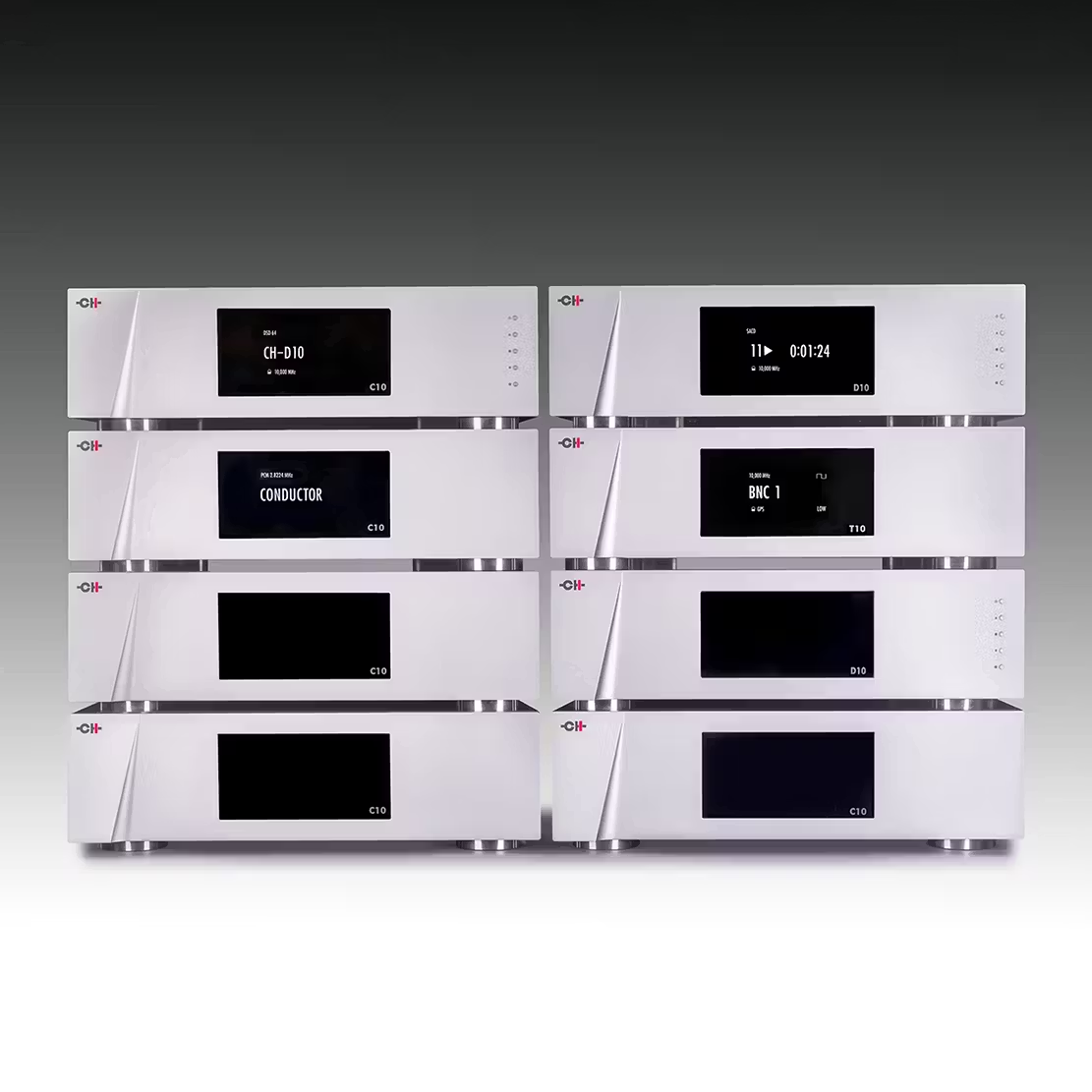
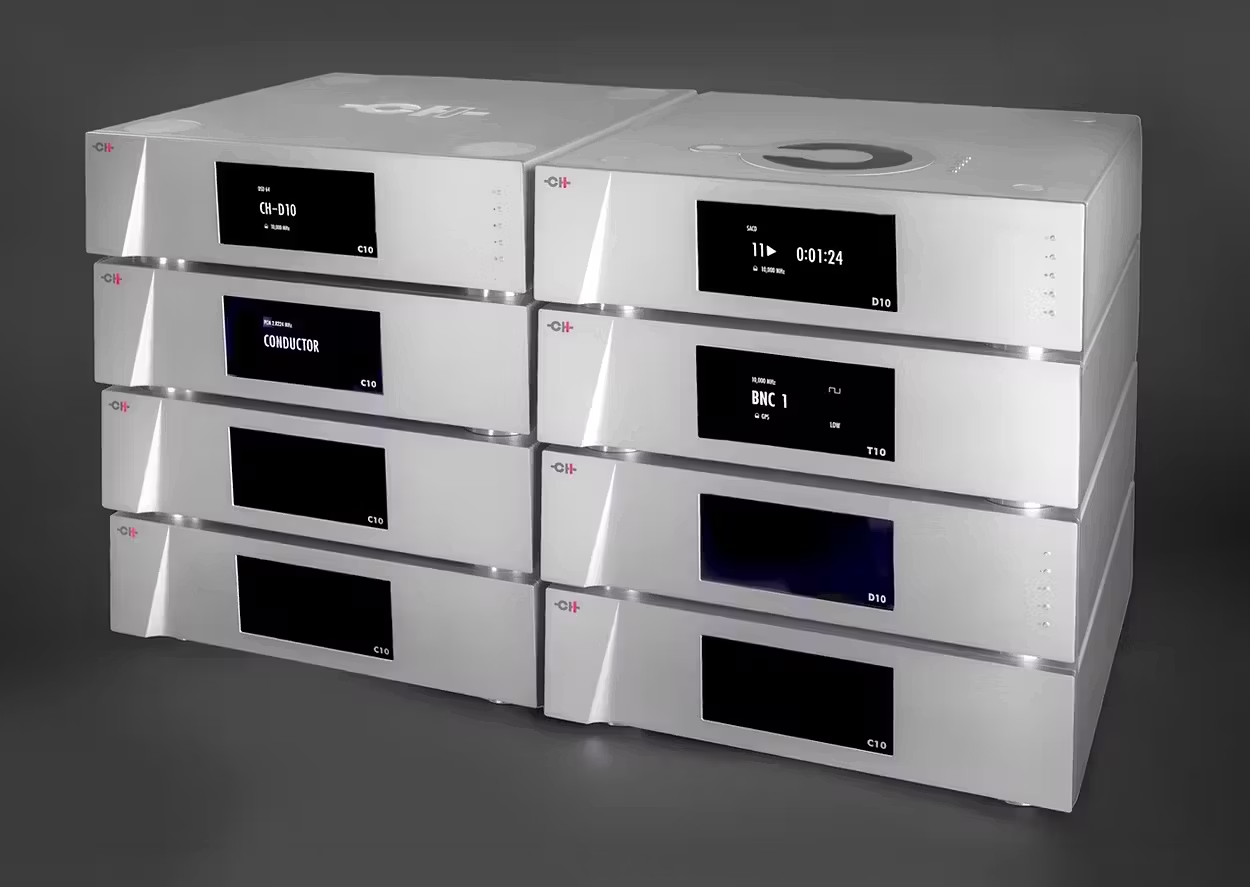
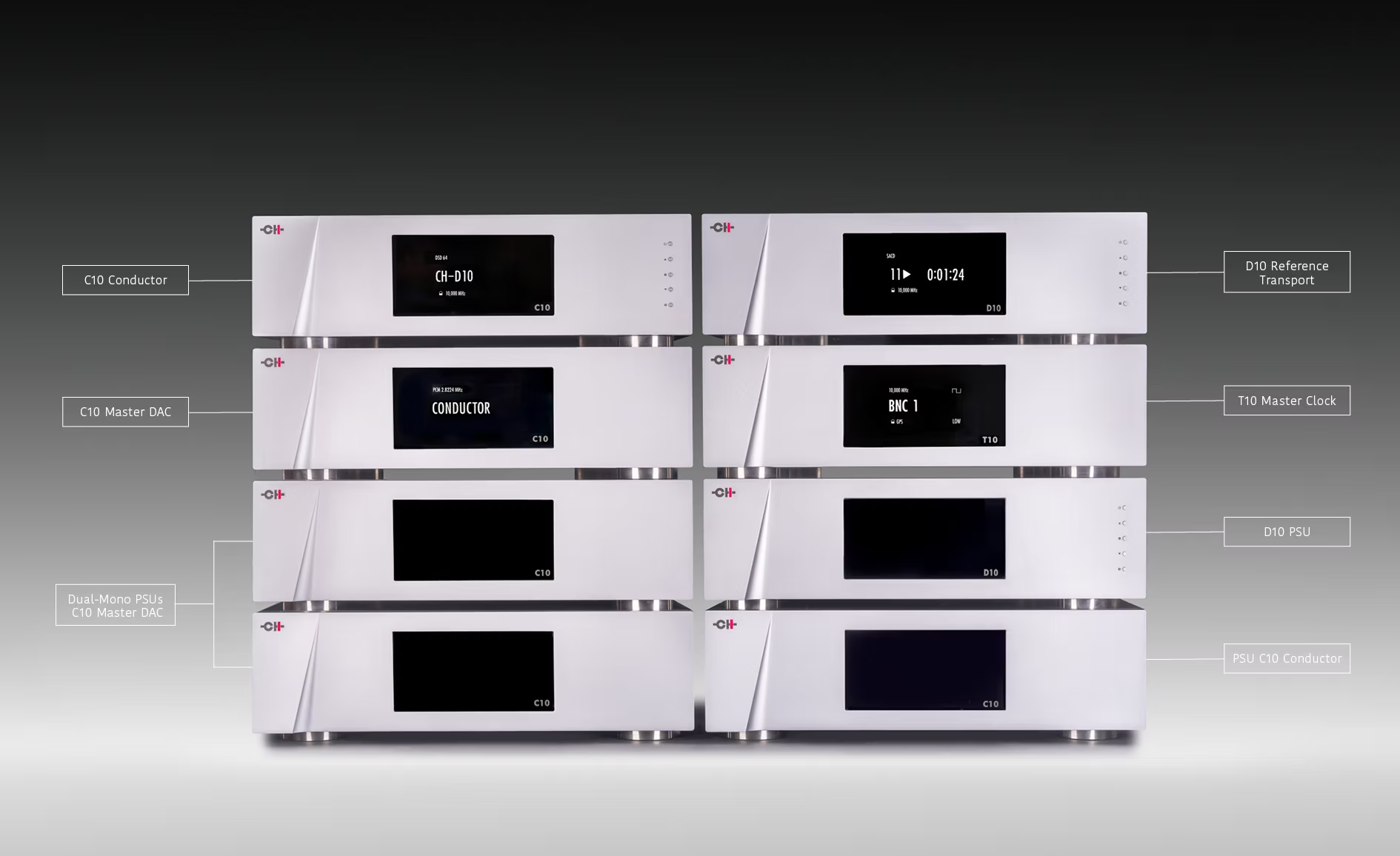
As CH Precision’s ultimate digital front end, the C10 Statement Mono Digital System stands at the summit of the company’s work in digital playback. It gathers the full C10 architecture—PEtER spline-based reconstruction, DSQ R-2R conversion, channel-dedicated power, T10 reference timing, and, optionally, the D10 Reference Transport—into a single system conceived not as an assembly of components, but as a complete instrument for the preservation of musical time.
The C10 Statement Mono Digital System is the fullest expression of CH Precision’s digital architecture: a dual-mono Statement DAC platform conceived for systems where digital conversion is the central act of musical reconstruction.
Its foundation is engineering discipline. Every critical element has been developed in-house: digital processing clocking strategy conversion topology analog output power supply mechanical structure firmware and control interface. Nothing outsourced. Nothing treated as generic. Each stage designed as part of a single coherent system whose purpose is to preserve timing resolution dynamic integrity and musical continuity from input to output.
That discipline reflects a lineage unusually deep in digital audio. CH Precision’s core engineering team includes figures whose work helped shape modern high-end digital playback through advanced DAC design sample-rate conversion clock-domain management digital filtering and proprietary signal-processing. In the C10 Statement Mono that experience is not presented as legacy. It is brought forward as architecture.
PEtER Spline Filtering: Beyond Conventional Upsampling
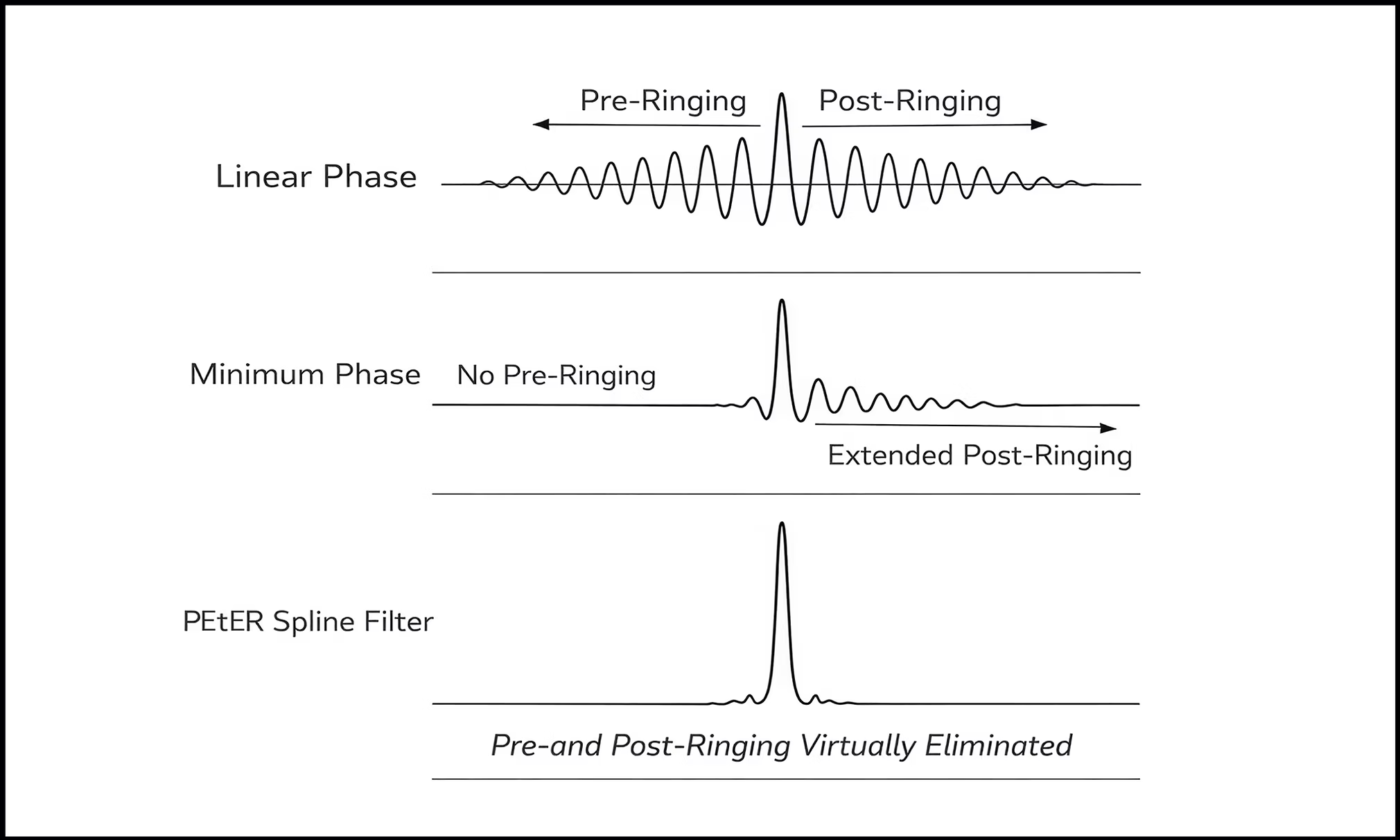
In digital playback upsampling and reconstruction filtering are among the first stages at which musical time can be altered. Much of high-end digital audio still relies on familiar filter choices—linear phase minimum phase apodizing slow roll-off sharp roll-off—each managing the same underlying compromises in a different way. Linear-phase filters preserve amplitude response but generate symmetrical ringing around transients. Minimum-phase filters remove pre-ringing but introduce phase shift and frequency-dependent delay.
Consistent with CH Precision’s engineering culture the objective was not to provide a menu of sonic alternatives but to resolve the underlying problem. PEtER is a proprietary spline-based reconstruction system designed to preserve the temporal shape of the musical event itself. In the C10 Statement Mono DAC that precision is carried through a channel-dedicated architecture whose independently supported conversion stages further protect the timing relationships established in the Conductor. The result is not simply greater separation but greater temporal constancy from reconstruction through conversion.
DSQ R-2R Conversion: Determinism, Not Approximation
Within the C10 Statement Mono Digital System CH Precision’s deterministic philosophy extends through the conversion stage and into the independent realization of each channel. The C10 employs a true multi-bit R-2R architecture in which every digital code maps directly to a defined analog state rather than relying on the extreme oversampling noise shaping and statistical averaging of conventional delta-sigma conversion.
In CH Precision’s DSQ implementation conversion occurs at full 24-bit data density at 2.8224 MHz using eight precision DAC elements per channel in a synchronized phased array. Within the Statement Mono architecture each channel operates within its own independently supported electrical environment allowing this exceptional data density to be maintained with greater isolation and stability through the conversion process.
Music is not perceived as an average. The ear follows each event as it unfolds relating transients fundamentals harmonics spatial cues and decay in time. DSQ renders those elements explicitly rather than reconstructing them statistically from a noise-shaped bitstream. In the Statement Mono system that deterministic precision is preserved independently for each channel strengthening the immediacy spatial coherence and temporal integrity of the musical event.
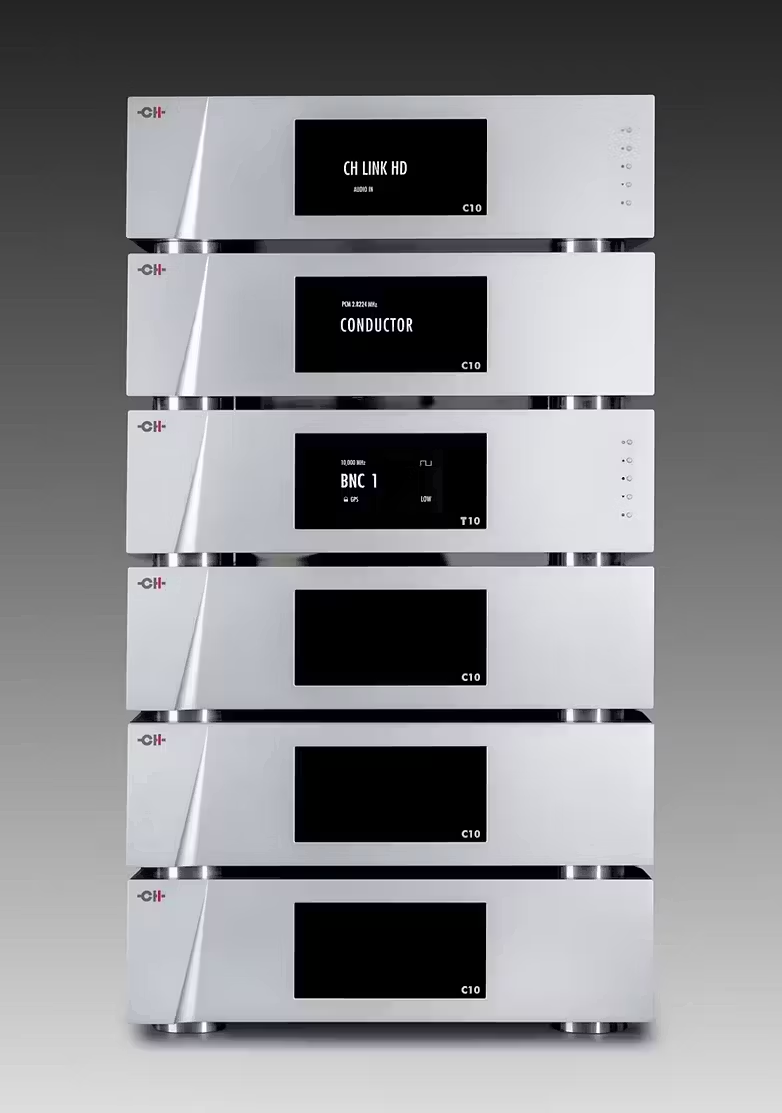
DSQ with Channel-Dedicated Power for Each Channel
In the Statement Mono Digital System DSQ is supported by true channel-dedicated power. The Master DAC chassis contains independent left- and right-channel conversion paths each supplied by its own Mono PSU galvanically isolated and housed in a separate chassis. Each channel therefore operates from an autonomous electrical foundation protecting the precision stability and temporal explicitness central to CH Precision’s DSQ architecture.
At the center of the system is the DSQ Phased Array in which multiple precision R-2R conversion elements operate in parallel under the control of the same ultra-stable timebase. Its advantage lies not merely in multiplicity but in synchronization. Every switching event is phase-aligned and algorithmically controlled allowing the arrays to increase precision without introducing time-domain blur.
The converter arrays are fabricated and mounted on a common substrate ensuring shared thermal behavior consistent geometry and tightly controlled electrical conditions. The result is lower error improved linearity and greater low-level resolution while preserving the temporal coherence that gives deterministic conversion its musical authority.
Here channel-dedicated conversion autonomous electrical support and external reference timing operate as a single architecture. Harmonic structures settle with density and ease. Spatial images remain stable and precisely located. Microdynamic nuance emerges naturally without edge glare or synthetic emphasis.
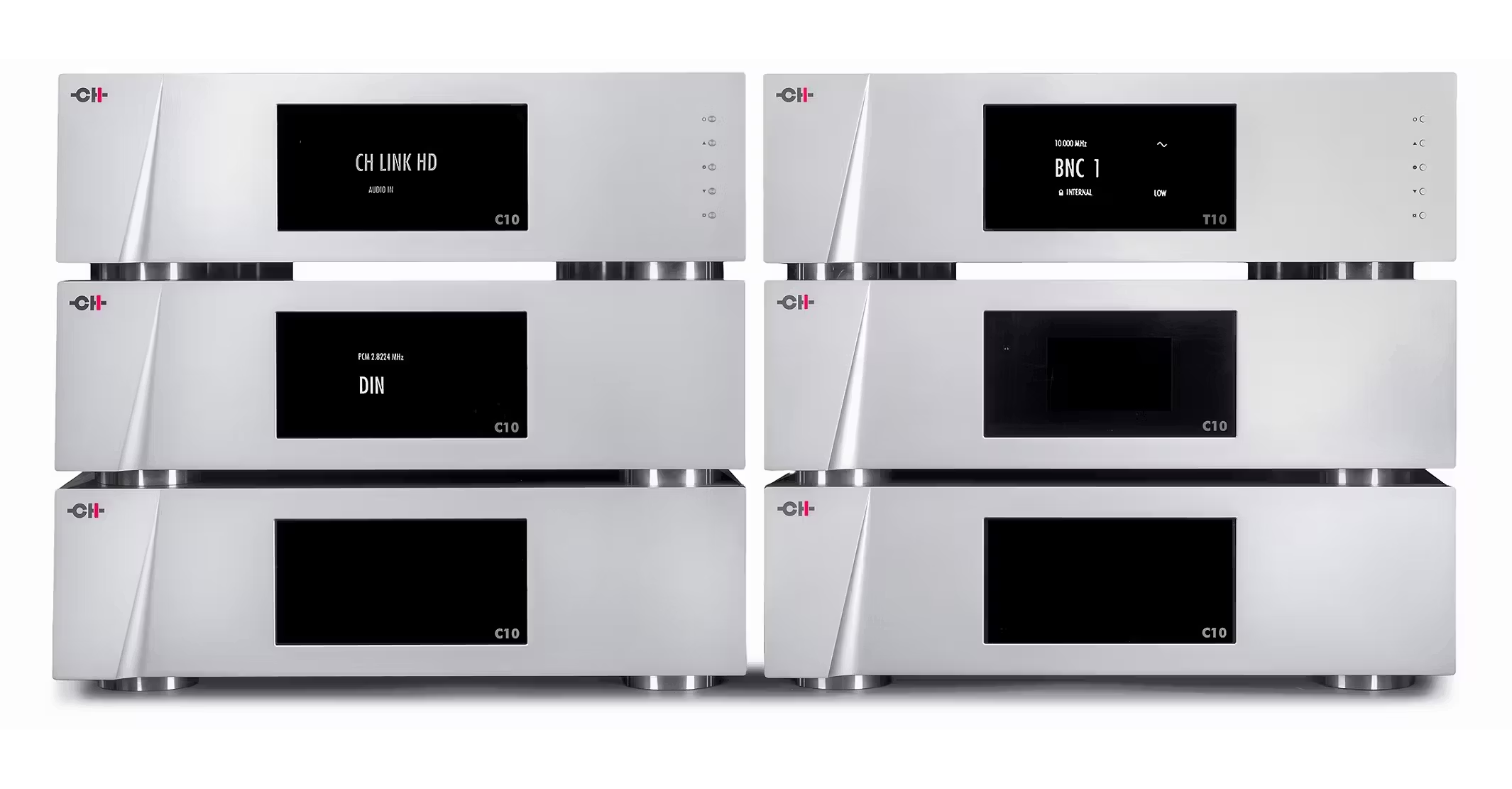
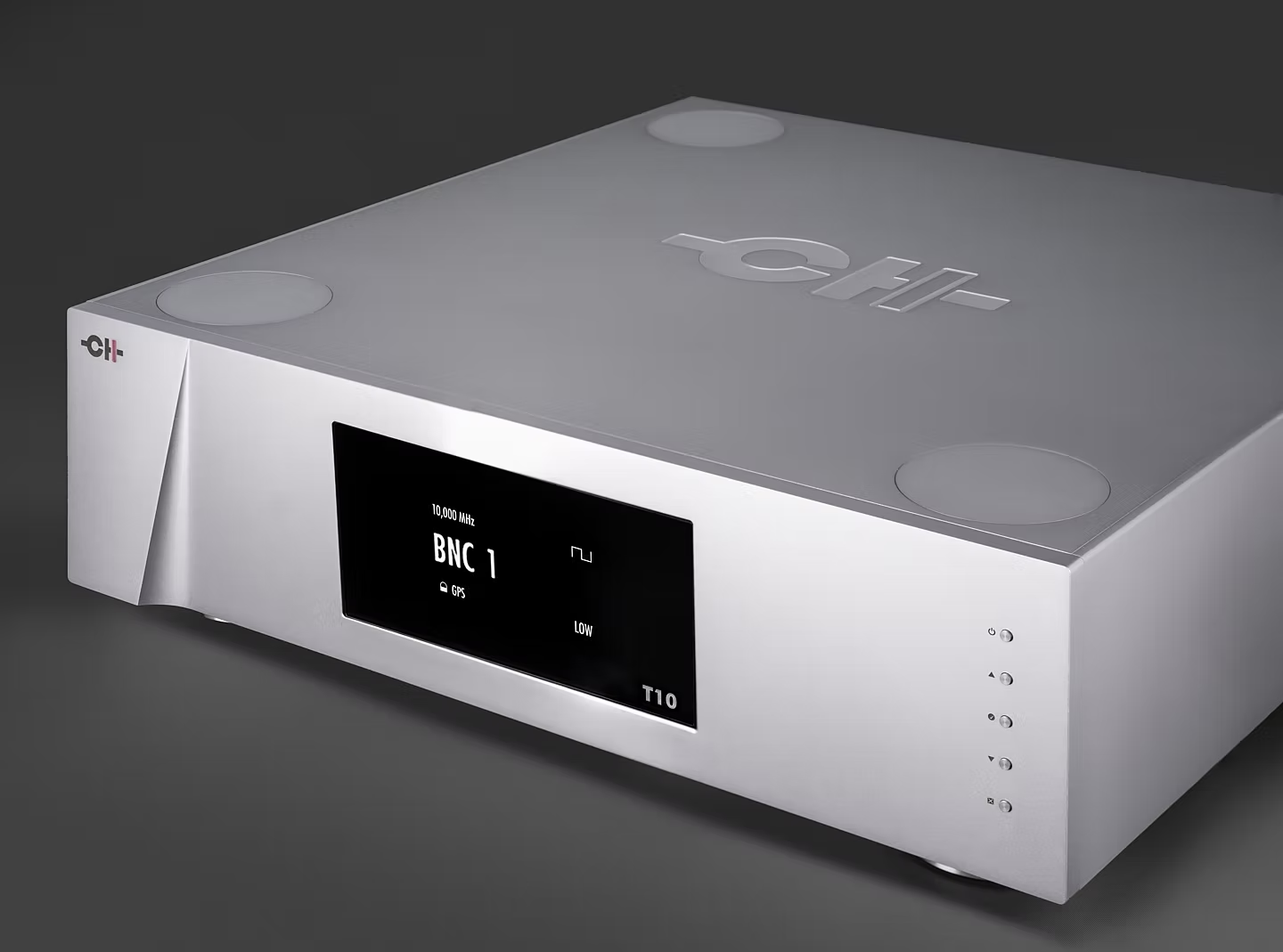
T10 Time Reference: One System, One Time Domain
In the C10 Statement Mono Digital System the T10 Time Reference is not an accessory. It is the temporal foundation of the system itself. Digital playback depends on timing at every stage: transport signal processing clock distribution conversion and output. The T10 addresses this at the source supplying an ultra-stable 10 MHz reference that locks the digital system to a single standard.
Within the Statement Mono Digital System that single reference is especially consequential: PEtER reconstructs the waveform in the time domain DSQ conversion resolves switching events deterministically and the Master DAC’s channels are powered independently by dedicated Mono PSUs. The T10 completes that logic by giving the entire digital front end a common temporal foundation.
The musical result is coherence rather than tonal alteration. Transients start and stop with greater certainty. Harmonic structures hold together more naturally. Spatial images emerge with sharper focus and more stable depth. The system sounds less assembled from separate digital processes and more like one instrument preserving the continuity of the performance.
D10 Reference Transport: The Highest Expression of Optical Playback
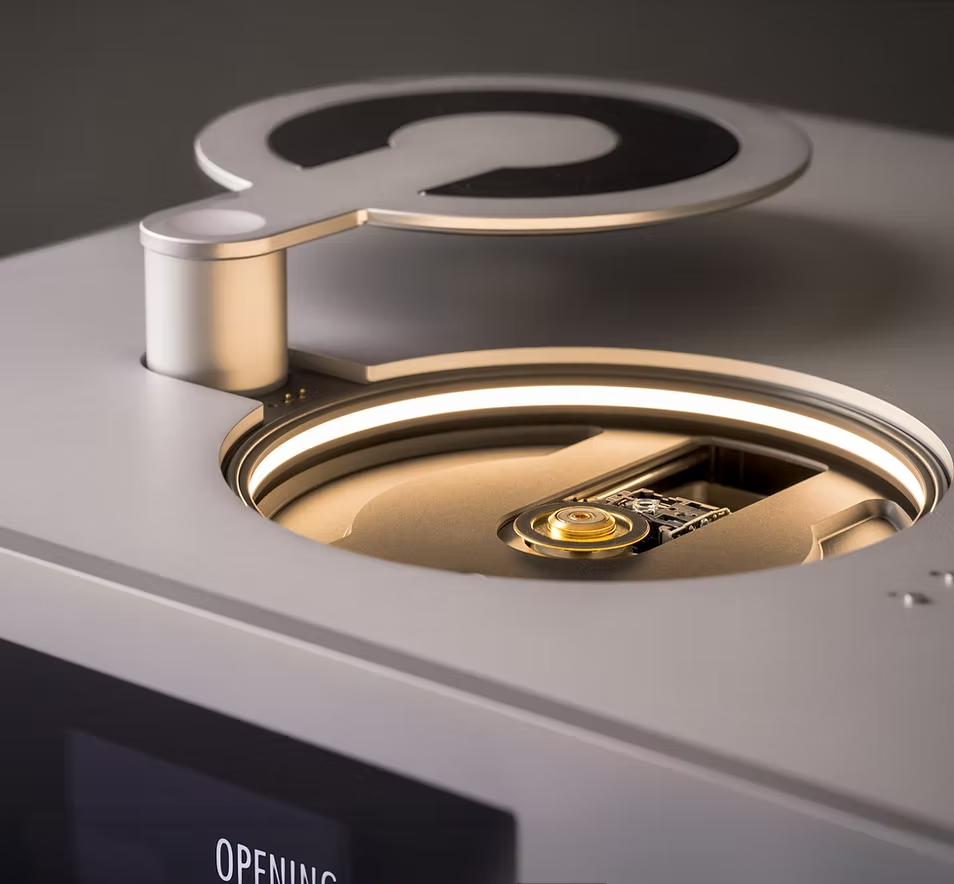
For listeners who value disc playback at the highest level the D10 Reference Transport extends the C10 Statement Mono Digital System to SACD CD and MQA-CD without reducing it to a conventional transport-and-DAC pairing.
At its center is MORSE CH Precision’s in-house optical mechanism: a mechanically optimized transport assembly built around mass damping isolation and disc-reading stability. Its suspended composite platform alpha-gel isolation motorized top-loading Disc Vault and precision leveling system are all designed to reduce vibration improve tracking accuracy and minimize reliance on error correction before conversion ever begins.
Within the Statement Mono Digital System the D10 operates under the same temporal discipline established by the T10 Time Reference allowing physical media to enter the system as part of a unified digital front end. Mechanical silence galvanically isolated digital outputs external power and reference-level clocking all serve the same purpose: preserving signal integrity from the disc surface to the C10 conversion stage.
The result is not nostalgia for optical playback but its most rigorous contemporary expression. SACD CD and MQA-CD gain the stability focus and coherence of the complete CH digital architecture. The D10 allows physical media to participate fully in the Statement Mono Digital System not as a legacy source but as a reference-level extension of the same engineering logic.
The Architecture of Musical Truth
The C10 Statement Mono Digital System is not a collection of separate components but a unified flagship architecture built around the C10 Statement DAC dual Mono PSUs and the T10 Time Reference. Its purpose is architectural as much as electrical: to give each critical domain of digital playback—processing timing power conversion and analog output—the physical and electrical conditions it requires to perform without compromise.
That separation is fundamental. High-speed digital processing timing control signal routing power delivery and analog conversion each impose different demands on the system. When these functions are placed too closely together or asked to share common electrical environments noise vibration and cross-domain activity can compromise the delicacy of the conversion stage. In the Statement Mono Digital System CH Precision extends the C10’s isolation strategy further: digital processing takes place in its own dedicated galvanically isolated chassis the Master DAC’s left and right channels are powered by independent Mono PSUs and the T10 provides a single ultra-stable temporal reference for the entire digital front end.
This is how CH Precision advances from the already extraordinary C10 Statement DAC to its most complete digital platform: not by changing the underlying philosophy but by giving that philosophy its most ideal physical electrical and temporal environment. The architecture becomes quieter calmer more isolated and more exact. Musical consequences follow naturally: greater low-level intelligibility more stable imaging more convincing decay and a stronger sense of continuity through complex passages.
The CH Control APP
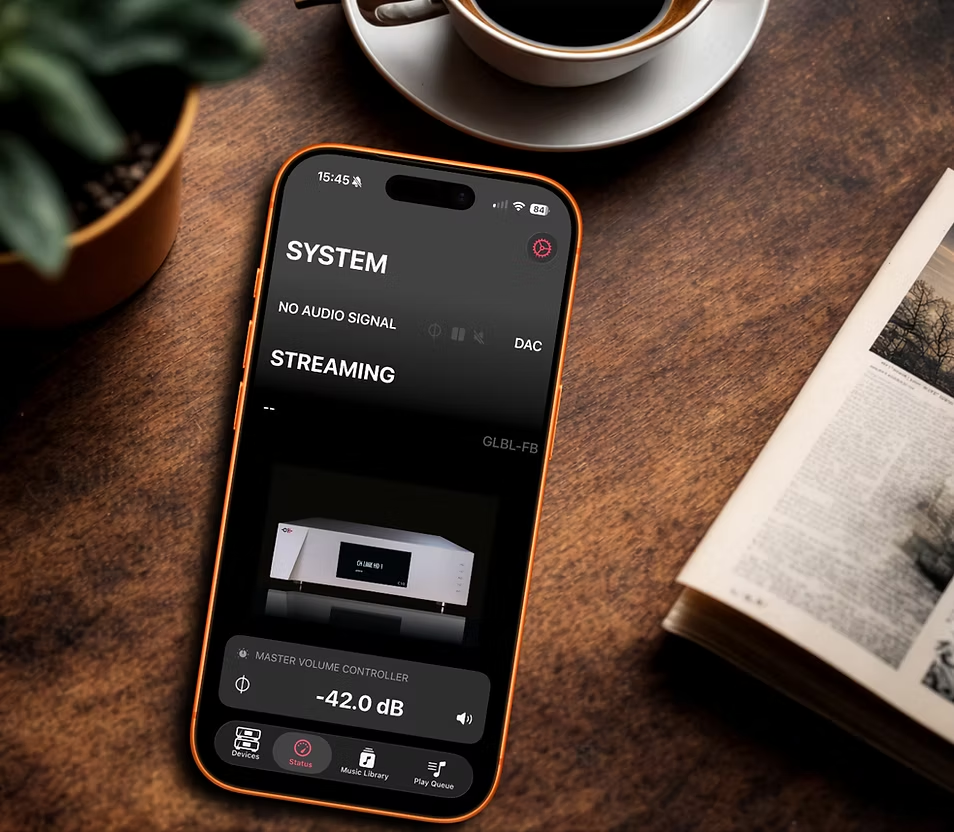
Available for Apple iOS and Android the CH Controller provides complete app-based control of CH Precision systems including input selection volume mute configuration settings and playback functions. It also allows users to access UPnP devices on the network and browse the music stored there bringing system control and local music access into a single interface.
Its structure follows the same operational logic as the componentsthemselves preserving a direct relationship between front-panel control and the mobile experience. True to CH Precision’s engineering culture the control platform is designed as an extension of the component architecture rather than a separate control layer. It adds convenience and flexibility while preserving the integrity precision and musical priorities that define every CH Precision system.
General
-
Type: Dual-chassis digital-to-analog converter
-
Options:
-
Additional digital input HD board
-
USB audio board
-
Ethernet streaming HD board
-
Clock sync board
-
-
Upgrade path:
-
D10 Reference Transport
-
T10 Reference clock
-
-
Color: Silver (standard), Anthracite or Champagne (option)
-
Dimensions: 440 x 440 x 133 mm (W x D x H), all units (DAC, Conductor, Power Supply)
-
Weight: 20kg (DAC, conductor) + 23kg (power supply)
-
Operating conditions: 5°C<T<35°C, 5%<humidity<85% no condensation
-
Power supply: Selectable 100V, 115V or 230V AC, 47Hz to 63Hz
-
Power consumption: <0.5W standby, 120W max in operation
User interface
-
Display: 800 x 480 pixels, 24 bit RGB AMOLED
-
Control: 5-button interface, Infrared remote control, Android app (iOS app to be released)
-
Firmware update: via USB flash drive or the Internet
Digital input
-
Type:
-
1x CH Link HD, 1x AES/EBU (XLR), 1x S/PDIF (RCA), 1x S/PDIF (TOSLINK) per Digital input board (1x standard)
-
1x USB type B per USB input board (optional)
-
1x RJ-45 on Streaming HD input board (optional)
-
-
Sampling rate:
-
CH Link HD: PCM 44.1kHz to 768kHz, DSD 2.8224MHz to 22.5792MHz
-
S/PDIF, AES/EBU: PCM 44.1kHz to 192kHz, DSD 2.8224MHz (DoP format)
-
Ethernet: PCM 44.1kHz to 768kHz, DSD 2.8224MHz to 22.5792MHz
-
USB: PCM 44.1kHz to 384kHz, DSD 2.8224MHz to 5.6448MHz (DoP format)
-
-
Bit depth: PCM 16 to 32 bit, DSD 1 bit
-
MQA: Full MQA decoding (unfolding and rendering) at 24bit/705.6kHz or 768kHz
-
File Format:
-
PCM: WAV, AIFF, FLAC, ALAC, AAC and MP3
-
DSD: DSF and DFF
-
-
Services:
-
Local: UpnP/DLNA, Roon ready, Audirvana compatible
-
Streaming: Qobuz connect, Tidal connect, Web radio
-
DAC
-
Conversion type: DSQ R-2R, 24 bit / 2.8224 MHz, 8 DAC per channel
-
Upsampling filter: Proprietary ultra-short, low-ringing, time-optimized, synchronous, 32-bit fixed-point PEtER algorithm
-
Clocking option: clock master or synchronization to reference clock or optical disc transport
Analog Output
-
Type: 1x Balanced XLR, 1x single-ended RCA per channel
-
Level: High (5VRMS), Mid (2.5VRMS) or Low (1VRMS) on RCA output (twice as much on XLR output), user selectable
-
Total Harmonic Distortion + Noise: <0.003% (@ 20Hz-20kHz, A-weighted)
-
Bandwidth: DC to 155kHz (-3dB)
-
Signal-to-noise ratio (@ 20Hz-20kHz, A-weighted):
-
>121dB, High output level
-
>120dB, Mid output level
-
>117dB, Low output level
-
-
Noise (on XLR output):
-
<9μVRMS, High output level
-
<5μVRMS, Mid output level
-
<3μVRMS, Low output level
-