
1

2
3
4
5

6
Hi-Fi Choice RECOMMENDED|PMC Prophecy 1 Bookshelf Speaker
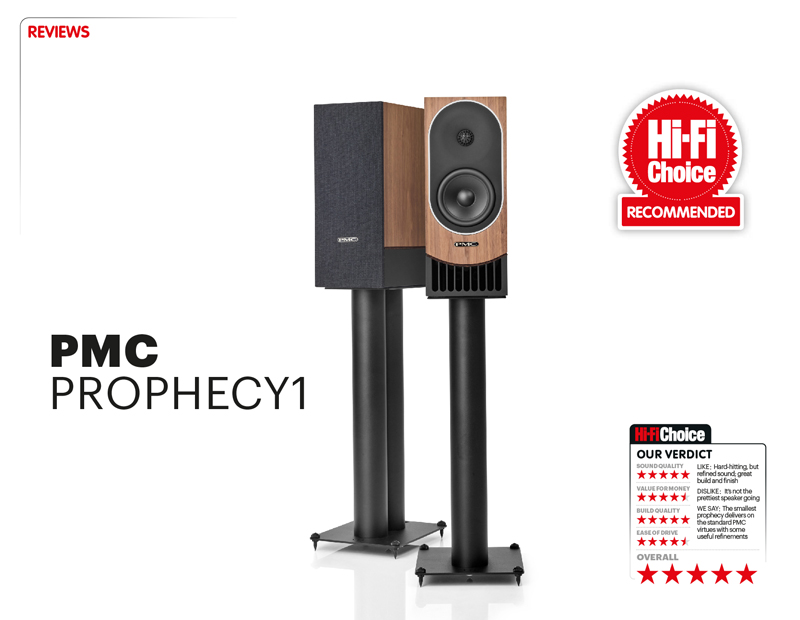
Loudspeaker design is an encouragingly stable area of audio but, even judged by the standards of the category, PMC has delivered two-way standmounts with the consistency of the Swiss rail network. The prophecy1 can trace its lineage all the way back to the Nineties as a two-way standmount where the output of the mid/bass is augmented by the presence of a transmission line.
The drivers comprise a 27mm soft dome tweeter derived from the company’s professional near and midfield studio monitors. It makes use of Ferrofluid cooling and a specially designed dispersion grille – visibly different to anything on the preceding twenty Series iterations – and the entire assembly sits in a much more prominent waveguide than some previous twenty Series models.
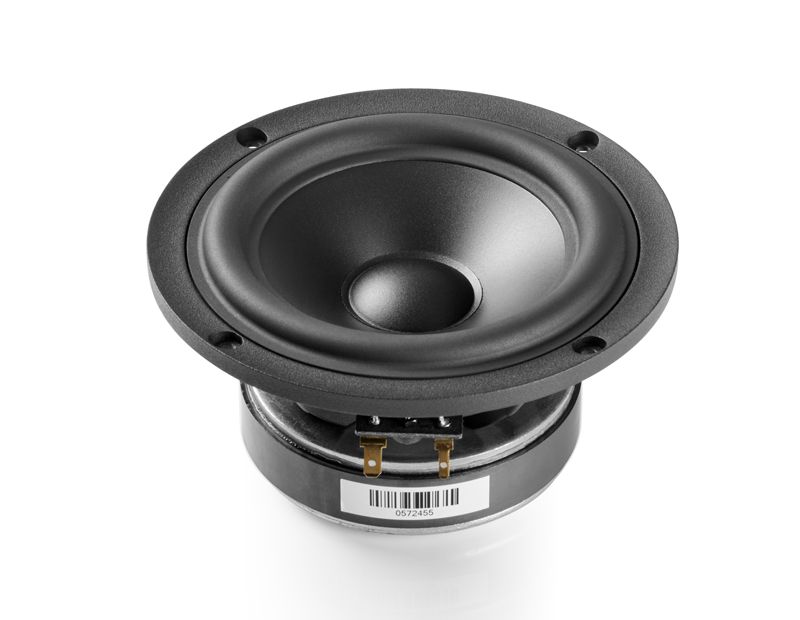
This hands over at a rather low 1.5kHz to a 127mm mid/bass driver made of an ultra-light, mica-filled cone material that PMC says is the ideal combination of rigidity, damping and weight. As this driver must be closely matched to the transmission line in the cabinet to deliver the most effective results, it is unique to the prophecy range. The transmission line is 1.79m long and follows the same folded loop arrangement as before. Unlike some other members of the prophecy range, this is longer than the outgoing twenty5.21.
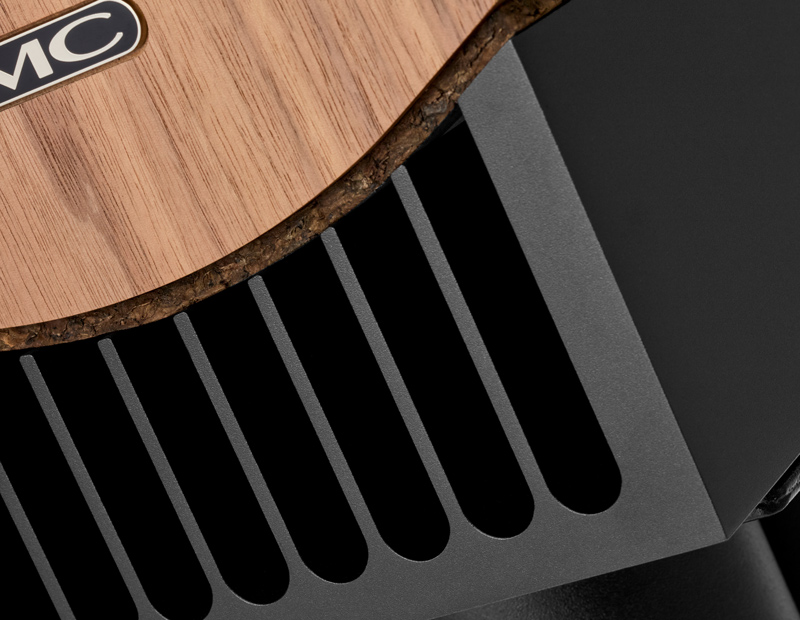
Crucially, this transmission line imbues the prophecy1 with the means to hit 50Hz at the +/- 3dB threshold (during testing it actually does better than that). No less importantly, it terminates in the LaminairX system, which is a metal extrusion fitted to the base of the cabinet. PMC says it offers further improvements to air management and claims that the new venting system offers a potential drop of 3dB in harmonic distortion – a significant jump over the outgoing model, which had a more conventional version of the Laminair port built into the cabinet. The metal extrusion is separated from the cabinet by a cork gasket to partially decouple it.
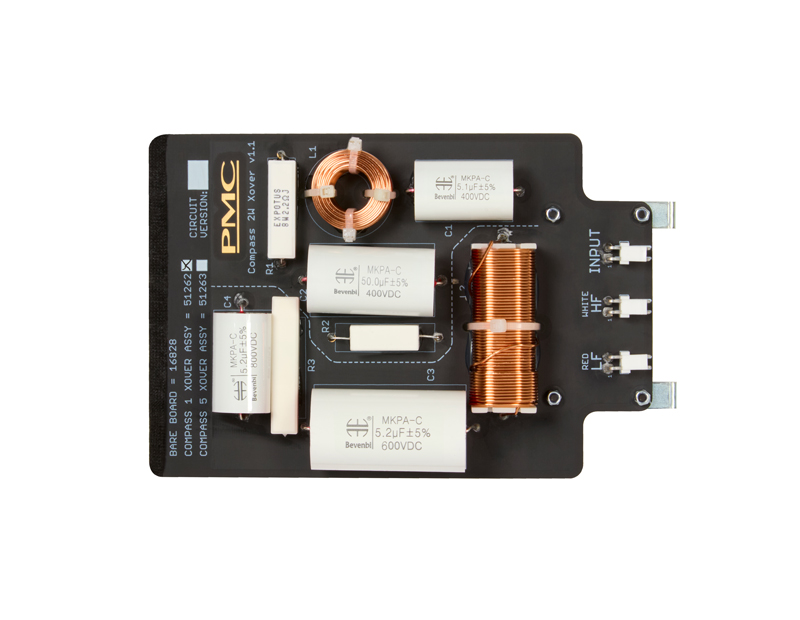
Other parts of the prophecy1 are in keeping with established PMC design practise too including the crossover, which is an evolution of PMC design practise dating back decades. This eschews a minimalist approach and uses rigorously implemented slopes. It is made up of carefully pairmatched components selected by hand. Like most recent designs from the company, the prophecy1 only supports single wiring. Sensitivity is quoted at 85dB with an impedance of 6ohm which isn’t huge, but the prophecy1 is not a hard speaker to drive and compares favourably to others at this sort of price point.
Sound quality
Something that is new for the prophecy series is a greater harmonising of components used in the range. There are only three drivers employed across all models and this allows the cabinets to be the same width across all models (as there is only one bass driver in use so the widest driver in the cabinet is a fixed value). This means that some members of the prophecy range get a better deal out of these proportions than others. I feel that the prophecy5 floorstander is one of the most attractive of any PMC speaker, while the prophecy1 feels a little on the spindly side in comparison. I cannot fault how it is bolted together, though, and one of the three available finishes is likely to work well in any room you might want to put them in.
I also feel more inclined to give the prophecy1 a pass on its looks on account of how it sounds. From the outset, this is a simpler and more fuss-free device to use than some PMCs of old. So long as attention is given to positioning and it is placed on sturdy stands, the prophecy1 is simplicity itself to dial in. Once you have done so, the standmount delivers some trademark PMC virtues.
The word that keeps cropping up in the notes is ‘heft’ and it’s a more accurate catch-all for what the prophecy1 does than simple ‘bass’. Opening track Cathedral on Vince Clarke’s awesome Sounds Of Silence is punctuated by two low bass tones. On the prophecy1 they have a weight and presence that is an attribute beyond what you might expect a speaker of these relatively slight dimensions to achieve. From the lower midrange down, it is convincing in a way that some equivalently sized designs aren’t.
This is partnered with a level of tonal realism and accuracy that is the hallmark of a company where one of the letters in the name stands for ‘Monitor’. Manchester Orchestra’s Obstacle has a vibrancy and realism that grabs and holds your attention in a way that isn’t the result of embellishment or any deviation from the recording itself, but instead an utterly faithful retelling of what is on the track itself. This transparency also means that the PMC will diligently reflect the behaviour of the electronics it is connected to in a way that is genuinely impressive. It effortlessly responds to the fuller and smoother presentation of a Cambridge Audio Edge A before making a hard-hitting and faster partner for a Naim Supernait 3.
What marks out the prophecy1 as more than simply a rehash of an (admittedly very good) recipe are the behavioural changes that also made themselves felt in the prophecy5. This is still an accurate and unfailingly believable speaker, but it’s able to do this while being sweeter and more forgiving than was the case with its ancestors. Even the decidedly edgy eponymously titled debut from Royal Blood is something that the PMC gives enough air, space and sweetness to that you can enjoy the crunching energy of the sound without worrying too much about the limitations.
This isn’t even the best bit. Like with the prophecy5, the LaminairX vent found on the prophecy1 results in the best transmission line behaviour I’ve yet to experience and one that largely deals with any remaining reservations I have about the concept. There is a tightness and sheer immediacy to how the prophecy1 handles hightempo heavy-impact material that makes it sound faster and much more engaging. Each bass strike is defined and has completely stopped before the next one starts in a way that is more akin to an isobaric arrangement. It’s the single biggest step forward in how a transmission line sounds in the entire time I have been reviewing PMC speakers.
Conclusion
What this adds up to is a loudspeaker that’s the same but different. You can see and hear the lineage that dates back to the Nineties and everything that PMC has done so well since then is done as well or better as it’s ever been. These attributes are more tractable, more forgiving and more immediate than ever before, all of which makes the prophecy1 a means of enjoying these virtues with fewer caveats than ever before. The world of speaker design might look like one where the major decisions have all been made already, but the prophecy1 is elegant proof that a quick evolutionary leap is still possible.