
1
2
3
4
5
6
7
8
9
10
11
12

13

14

15
16

17
18
19
20
21
22
23
24
Direct Drive! The Sound is More Direct Than Belt-Drive | Thorens TD 404 DD Direct Drive Turntable
Excerpted from 《u-audio》
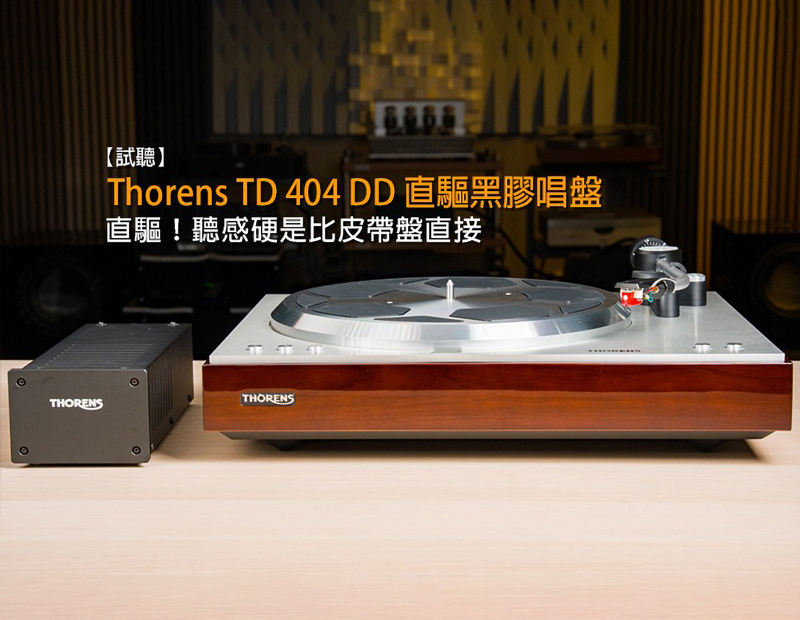
Speaking of Thorens, the most famous turntable is undoubtedly the TD 124, launched in 1957. Designed back then for professional broadcast studio needs, German engineering created a precise and durable turntable. To that end, Thorens also released the TD 124 DD reissue, crafting a modern classic with a high-torque direct drive motor. However, the retro-styled TD 124 DD might not resonate as much with younger generations. So, the TD 404 DD, which made its debut at the Munich High-End Show in 2025, takes the skeleton of the TD 124 DD and dresses it in the new attire of the TD 404 DD, creating Thorens’ Modern Classic.
Thorens’ Modern Classic
Actually, from a Modern Classic perspective, the TD 124 DD reissue is quite appealing, but the classic TD 124 from 1957 might be completely lost on many younger people. 1957? A turntable from nearly seventy years ago? It’s probably too distant for the younger generation!
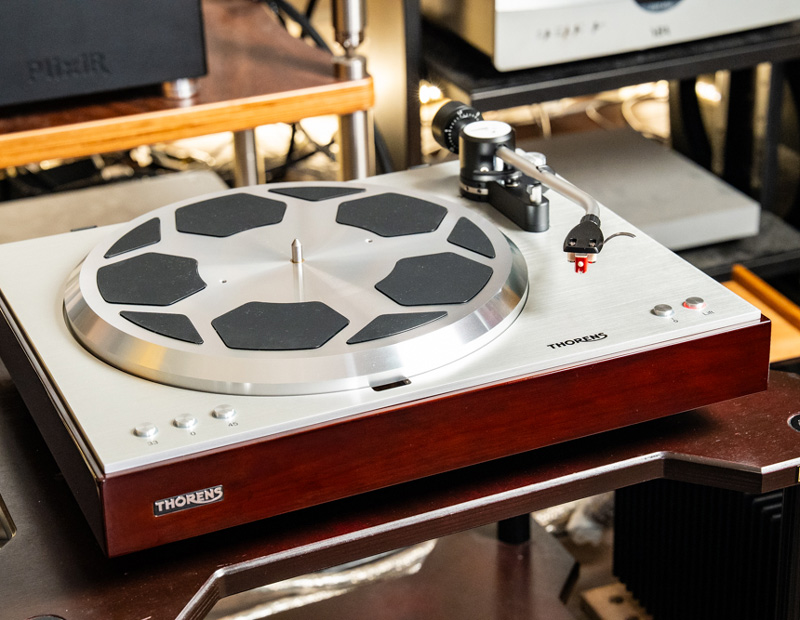
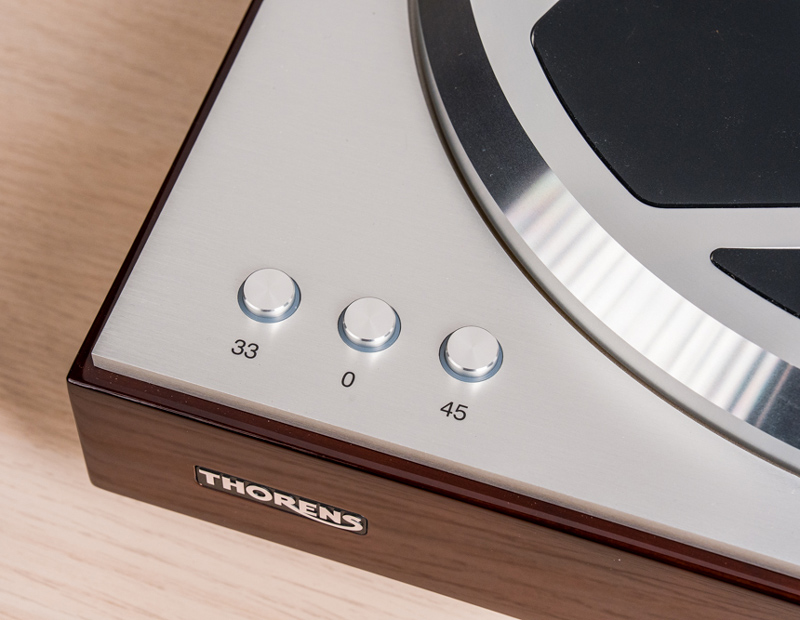
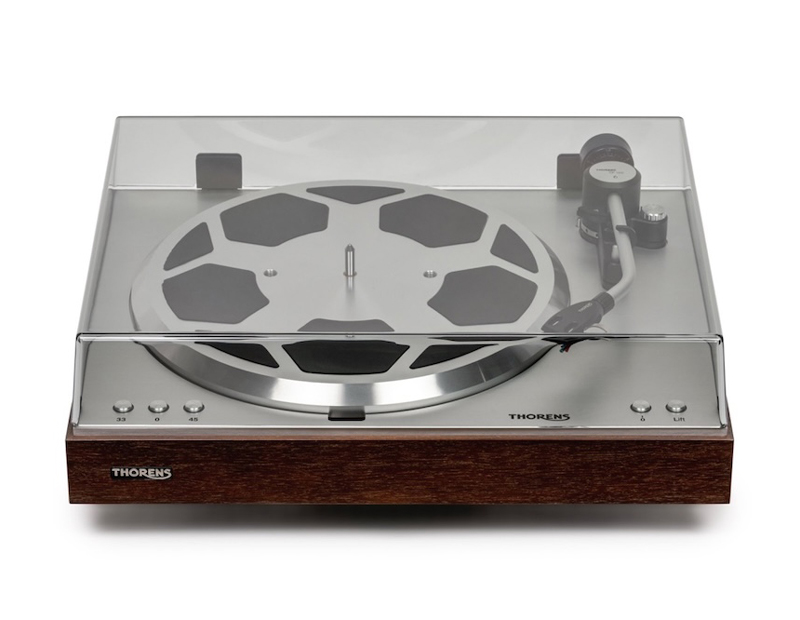
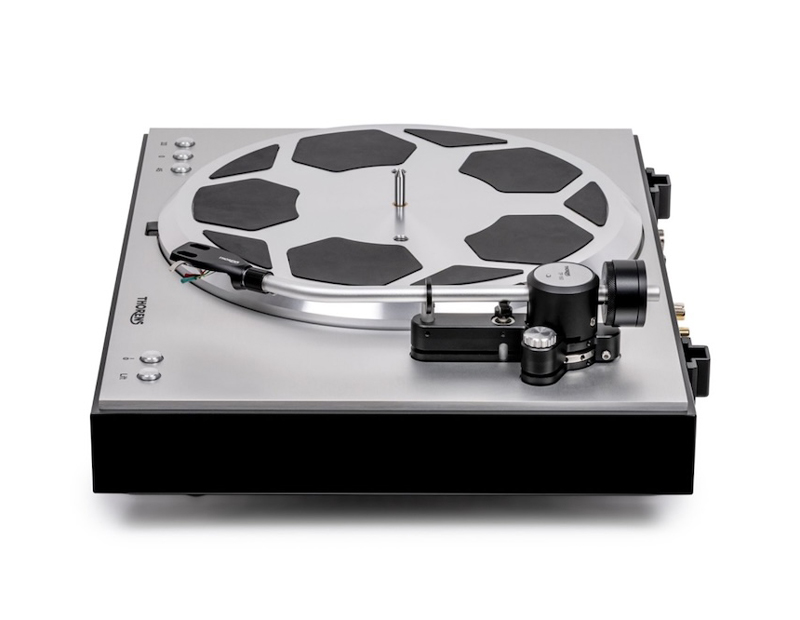
Therefore, the newly introduced TD 404 DD houses the direct drive motor from the TD 124 internally, paired with a stroboscope speed correction system for easy fine-tuning of rotation speed. These are classic features, but the TD 404 DD is dressed in a clean, minimalist chassis. Its simple, square vinyl-playing aesthetic exudes a Bauhaus-inspired minimalist style, and beneath this simple exterior lie the essential elements for a well-executed turntable.
Essential Condition for a Great Turntable: Resonance Control
What are the essential conditions for a great turntable? Resonance control! It involves measuring the operating resonant frequencies of all movable parts within the turntable as much as possible, pushing these resonances outside the range of human hearing.
What are these movable parts? The platter, bearing, motor, chassis, tonearm, headshell… each possesses specific resonances. When assembled and working together, the goal is to keep the overall resonance outside the audible range. This means that even if distortion exists, it remains inaudible.
Flagship TD 124 High-Torque Direct Drive Motor Technology Trickles Down
How does the TD 404 DD achieve its resonance control goals? Two key aspects: First, it employs a high-torque direct drive motor comparable to the flagship TD 124 DD. The rotational speed is exceptionally stable, allowing it to quickly reach the correct operating speed. It’s also very quiet, achieving near-zero rotational wow and flutter. Paired with an electronic speed control system, it accurately maintains pitch accuracy.
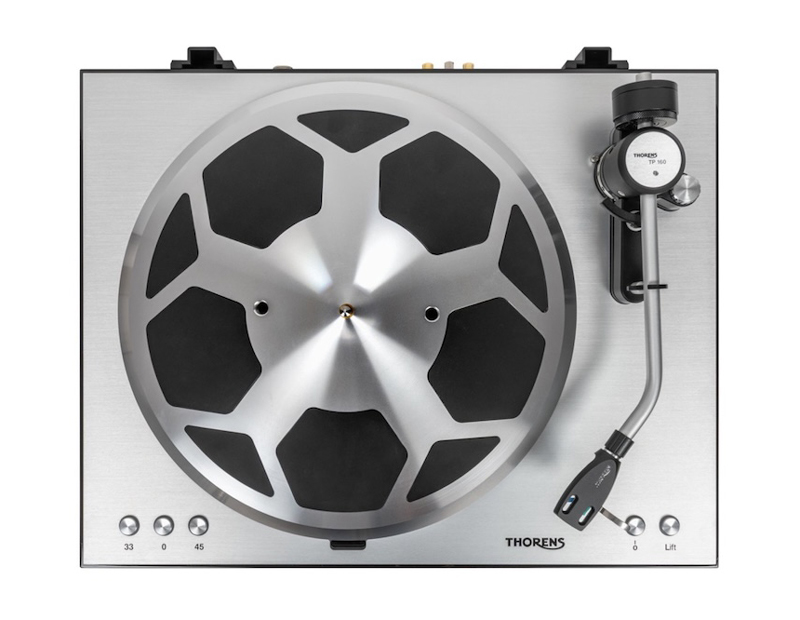
Second, the platter itself utilizes a high-damping design to rigorously control resonance. The TD 404 DD’s platter weighs approximately 3.2 kg, slightly lighter than the TD 124 DD’s 3.5 kg platter. However, weight isn’t the sole critical factor. Compared to heavy, rigid platters, 3.5 or 3.2 kg isn’t particularly substantial. But the key lies in the hollowed-out sections on the TD 404 DD platter, combined with damping materials – this is the core of Thorens’ clever resonance control technology.
Third, the TD 404 DD’s chassis employs a sandwich construction to manage resonance. The top layer of the TD 404 DD’s chassis is 5 mm thick aluminum, while underneath lies MDF and real wood veneer. This solid wood outer frame conceals the sandwich structure, but this combination of hard and soft materials, leveraging the physical properties of composites for resonance control, represents the mainstream approach in modern turntable design.
Chassis Isolation Combining Hard and Soft Approaches
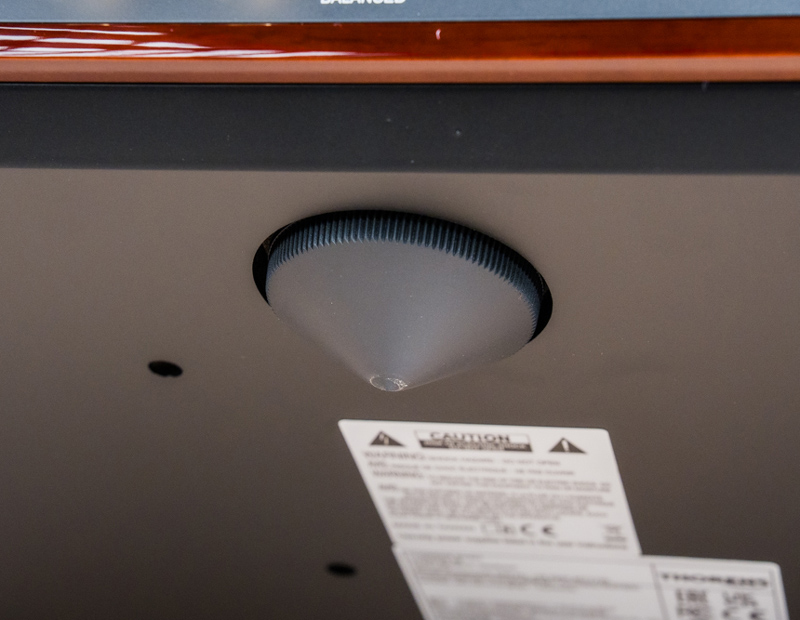
Mentioning the combination of hard and soft approaches, we must also discuss the feet. The TD 404 DD’s feet may not look particularly special, but they contain internal springs, providing a degree of elasticity. This allows the TD 404 DD’s chassis to decouple from the audio rack.
Of course, the spring-damped feet of the TD 404 DD differ from so-called “soft” suspension designs. The spring damping is quite firm, barely compressible, intended to add a bit of damping to the feet rather than provide significant elastic isolation.
Two Major Practical Features
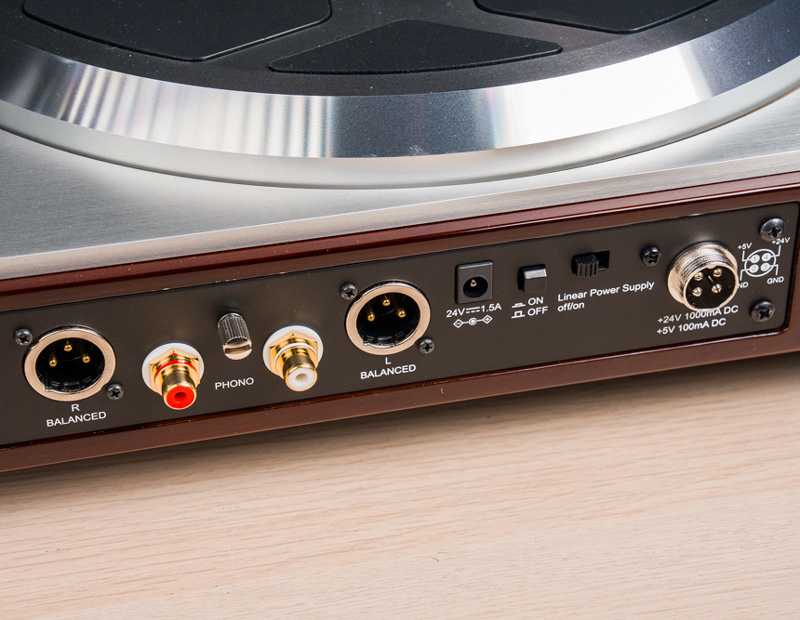
Having outlined the efforts made in “resonance control” for the TD 404 DD, let’s move on to its practical features. Simply put, there are two: First, it comes equipped with both RCA and XLR output terminals, offering greater flexibility when connecting to a phono stage or preamplifier.
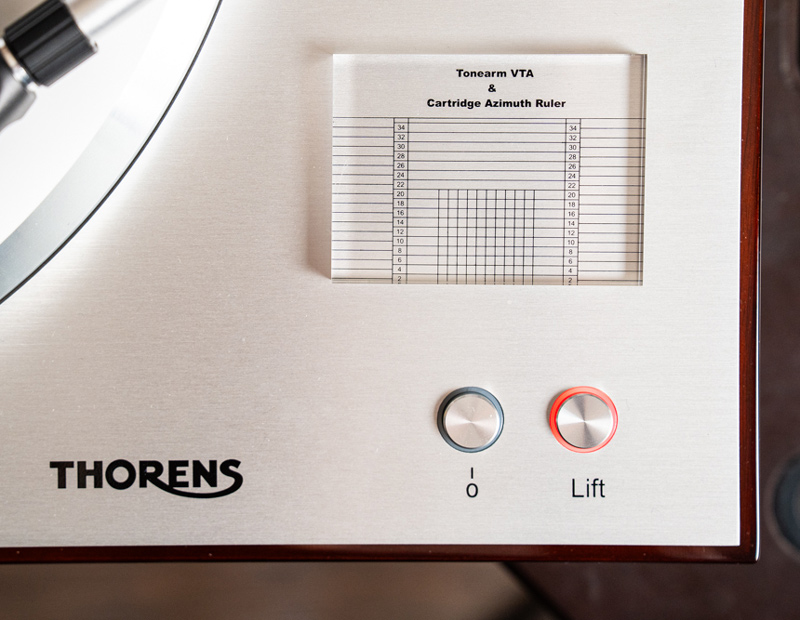
Second, it features the e-Lift automatic tonearm lifter. This doesn’t mean the TD 404 DD is an automatic turntable; playing vinyl still requires manual operation. However, the e-Lift automatically raises the tonearm when it reaches the innermost part of the record, stopping playback and preventing the stylus from continuously running in the inner groove.
The e-Lift is Incredibly Useful
For those who enjoy falling asleep to vinyl, the e-Lift is a godsend. Placing a record on the platter, one side typically plays for only ten to twenty minutes. If you happen to doze off halfway through, and the record keeps looping in the inner groove all night, you risk damaging the diamond stylus, not to mention the record itself. Now, with the e-Lift, you can enjoy vinyl as you drift off to sleep without worrying about ruining your precious records; the TD 404 DD will automatically lift the tonearm and pause playback.
For seasoned enthusiasts, the e-Lift is also a fantastic feature. As someone who has played vinyl for many years, I remember boasting in my youth about the precision of my manual cueing, claiming I could place the stylus “as light as a feather,” producing almost no thud upon contact. That required sensitive, precise, and gentle fingers to smoothly lower the stylus onto the record surface, avoiding a loud “pop” at the start.
Increasing Reluctance to Cue Manually with Age
But now, I’m increasingly hesitant to “cue manually.” Fear! A slip of the finger could cause the cartridge to drop heavily onto the record, potentially breaking the stylus. As I get older, my finger movements are less precise. It’s wiser to use the tonearm lifter, allowing the cartridge to descend gently.
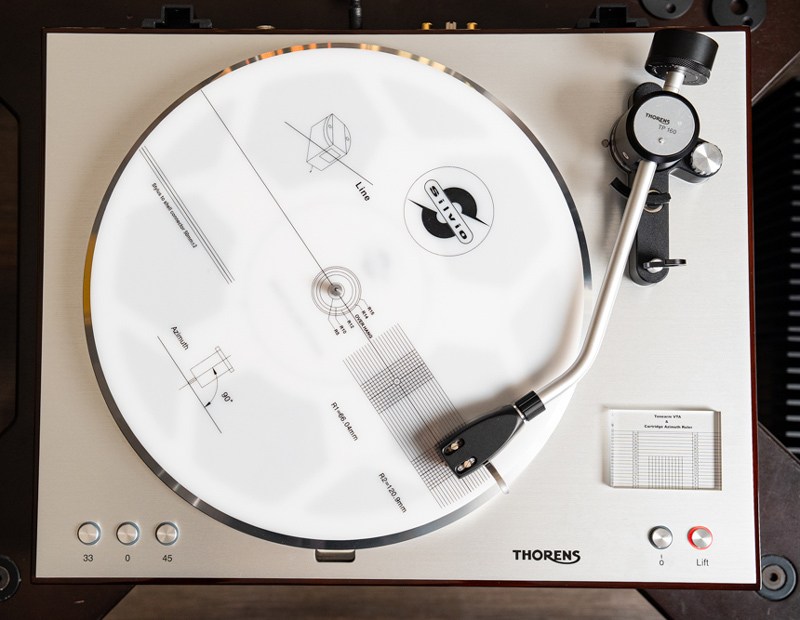
During this audition of the TD 404 DD, the e-Lift feature proved incredibly convenient. After moving the TP 160 tonearm to the playback position, pressing the Lift button caused the tonearm to descend slowly. There was still a slight thud when the stylus contacted the vinyl, but it was relatively light, eliminating the risk of damaging the cartridge that comes with manual cueing.
New TP 160 Tonearm Designed by Renowned Expert
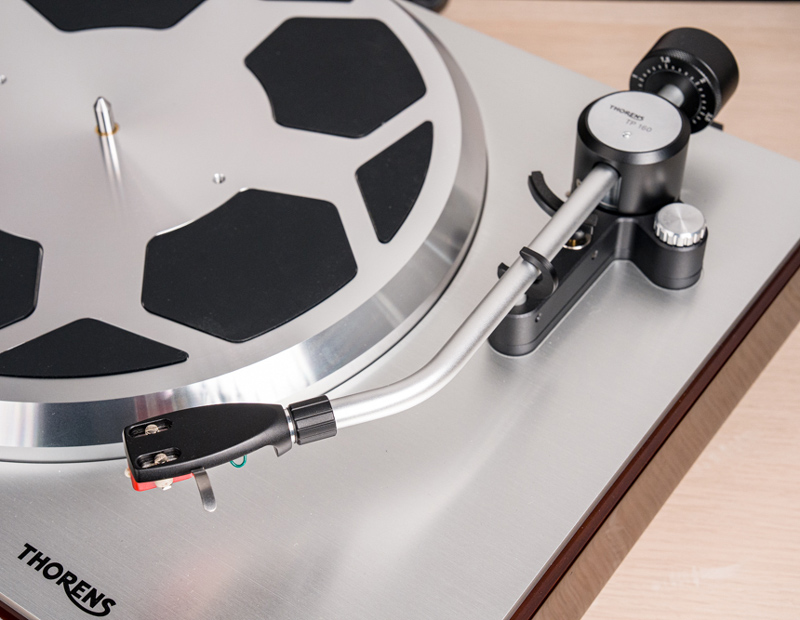
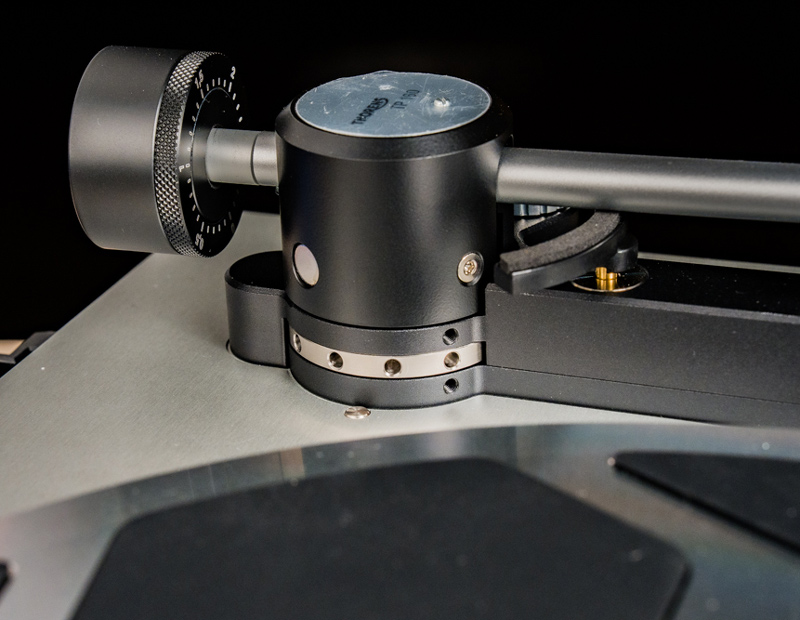
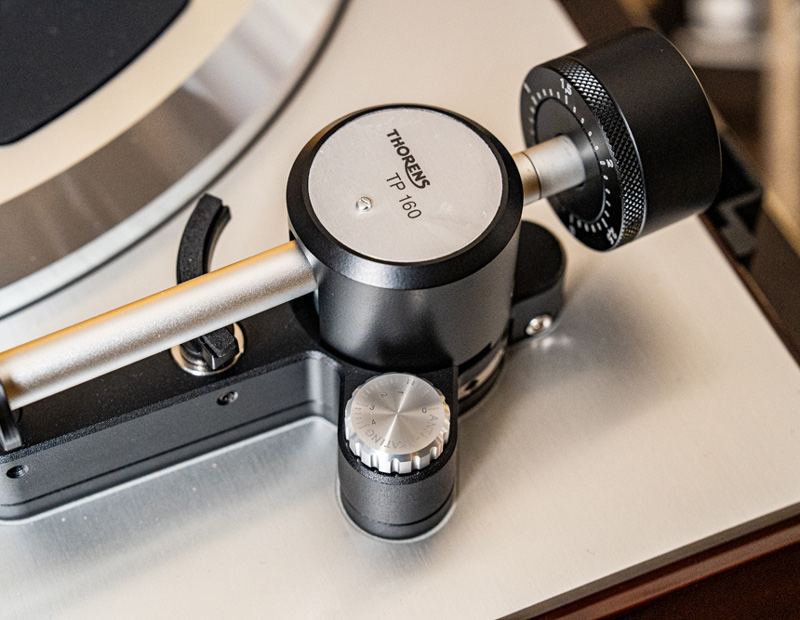
Next, let’s discuss the newly equipped TP 160 tonearm on the TD 404 DD. This seemingly simple and understated TP 160 tonearm was developed with assistance from Helmut Thiele. You can find related information on his website. I’ve met Mr. Thiele once before; Gunter Kurten, the owner of Thorens, brought him to Taiwan, and I had the chance to interview him then.
Helmut Thiele is a highly knowledgeable audio designer. I learned quite a bit during that interview, but the focus of the article was on Thorens, so to avoid digression, I didn’t mention Helmut Thiele’s involvement in designing the tonearm for Thorens at the time.
High-Precision Knife-Edge Bearing
The TP 160 utilizes a high-precision knife-edge bearing. Its construction comprises a bearing and a hardened steel blade, forming a nearly linear contact point that eliminates axial play. This type of knife-edge bearing is self-aligning, features extremely low friction, is robust and durable, and requires virtually no maintenance. Paired with a magnetic guiding system, it cancels interference in both horizontal and vertical planes, allowing the tonearm to maintain excellent tracking stability.
Sounds complicated? In simpler terms, the tonearm needs to pivot to move inward across the record. A knife-edge bearing has lower friction than traditional gimbal bearings, so the tonearm moves inward more smoothly and with less resistance. That’s the gist!
J-Shaped Tonearm Tube with SME Standard Headshell
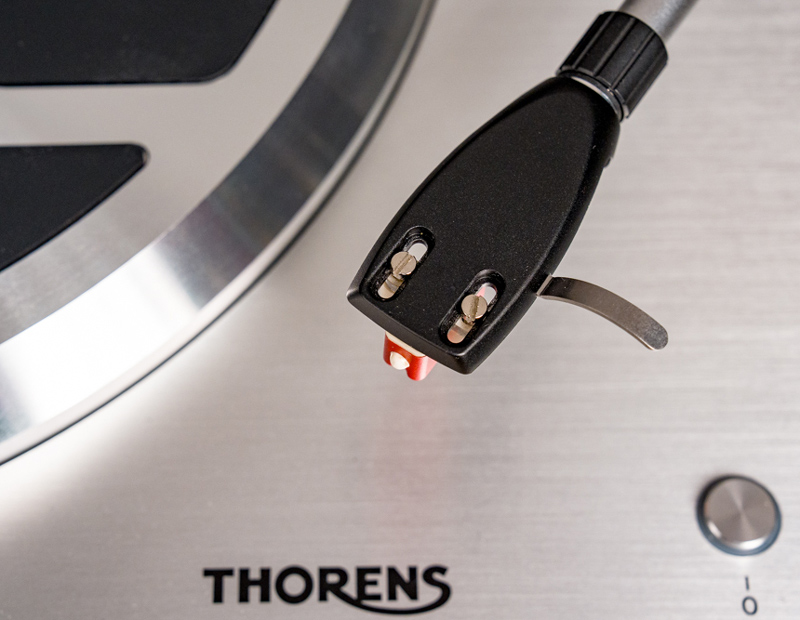
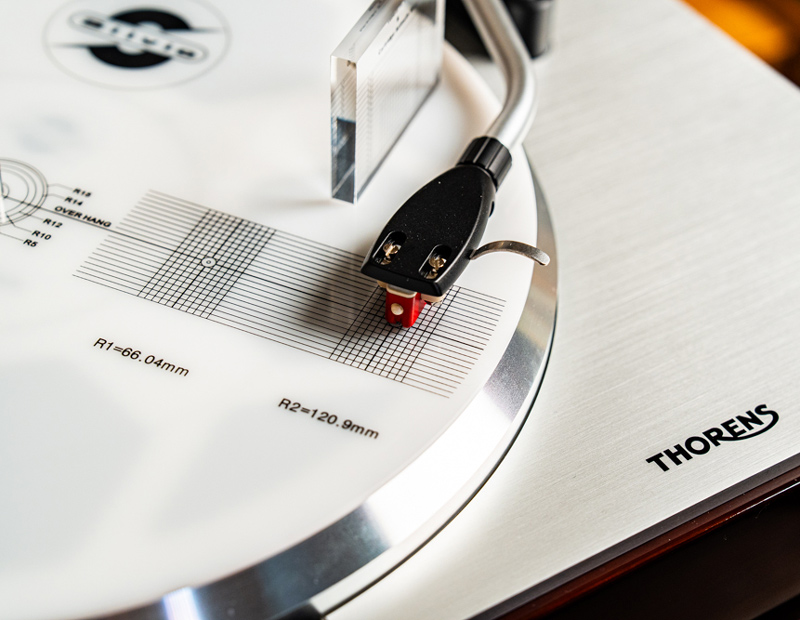
The classic J-shaped tube design of the TP 160 falls into the medium-mass category. Equipped with an SME-type connector for the headshell, changing cartridges is quite convenient.
Of course, some tonearm designers believe in minimizing moving parts. For example, Rega makes tonearms without a detachable headshell, arguing that the precision of the headshell connection can vary with each change, whereas a one-piece arm tube guarantees consistent specifications.
Is a detachable headshell better, or is a one-piece design better? In my view, the correct answer is: a well-executed tonearm is the right choice, regardless of design. Thorens offers both types. The TP 92 is a straight arm without a detachable headshell, while the TP 160 is a J-shaped arm with a headshell. Having the detachable headshell option means you can use cartridges like the Ortofon SPU, giving the TD 404 DD more of a classic vintage vibe.
Imagine the Retro Appeal of Using an Ortofon SPU
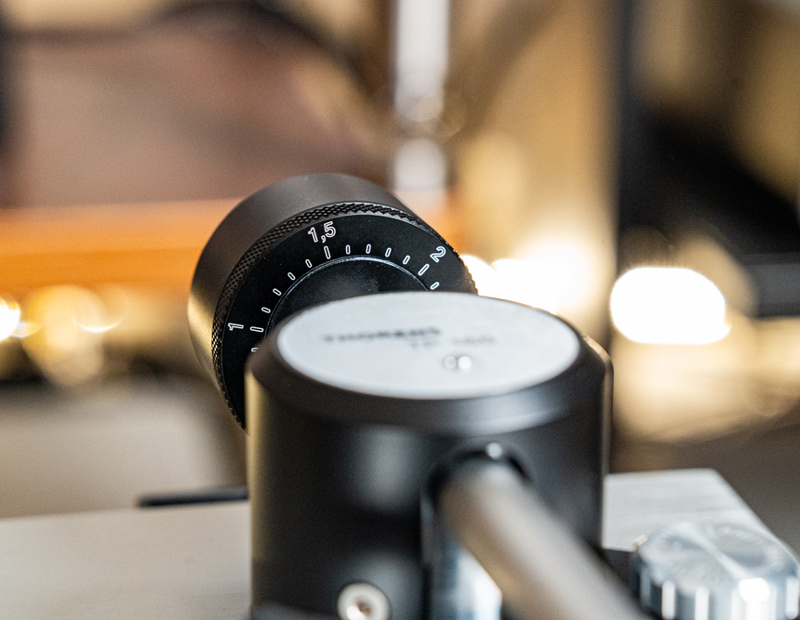
Looking at Thorens’ specifications, the recommended cartridge compliance is medium mass. However, if you want to use an Ortofon SPU, you don’t need to worry about insufficient counterweight. The TD 404 DD features dual counterweights; if you encounter a heavier cartridge, simply add the second weight.
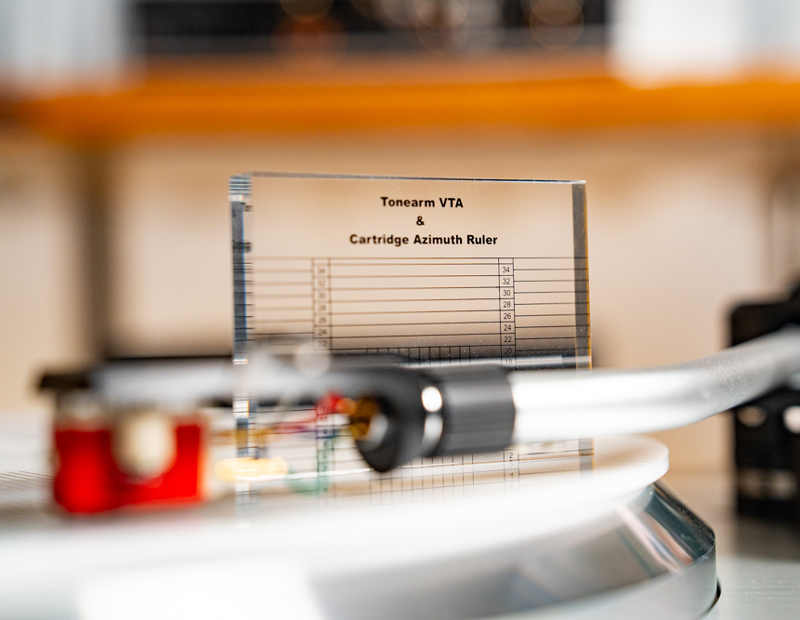
Regarding adjustments like VTA, anti-skate, and azimuth, the TP 160 is fully equipped, offering high playability. Combined with the SME-standard headshell, if you have multiple cartridges you like to swap based on music genre, the TP 160 is both convenient and fun.
TNP 124 Power Supply is Standard with the Taiwan Distributor
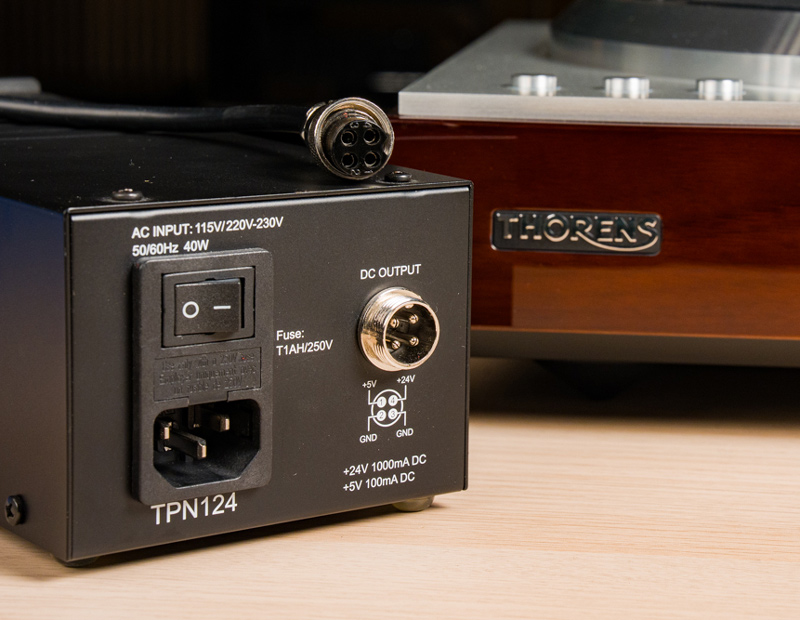
Finally, let’s talk about the TNP 124 linear power supply, which replaces the seemingly less impressive small wall wart transformer. It provides cleaner power to unlock the TD 404 DD’s full potential.
The TNP 124 linear power supply is sold as an optional accessory in some international markets. However, the Taiwan distributor believes that to experience the TD 404 DD’s best performance, the TNP 124 is essential. Therefore, the distributor includes the TNP 124 as standard equipment. Rest assured, this is reflected in the pricing, so the TD 404 DD’s price in Taiwan is understandably higher than in Europe, precisely because the TNP 124 is included as standard.
Thanks to S.B. Audio for Personally Setting Up the TD 404 DD
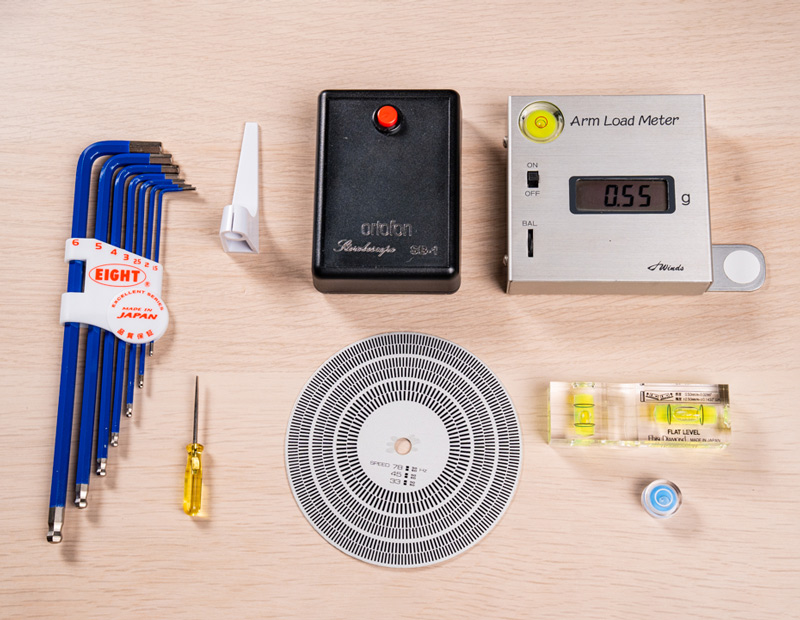
So, during my audition of the TD 404 DD, I directly used the TNP 124. The distributor thoughtfully paired it with a Supex SDX-2000 MC cartridge and even made a special trip to the U-Audio editorial office to meticulously set up the TD 404 DD for me. This saved me the worry of potentially breaking the stylus due to my aging eyesight – which would have resulted in an immediate sale!
During the TD 404 DD audition, I paired it with U-Audio’s own EAR 868P preamplifier and 509 MK II power amplifiers. The 868P has built-in MM/MC phono stages. The Supex SDX-2000 MC cartridge has an output voltage of 1.8 mV, which is medium-low output. It matched well with the 868P’s MC input; gain was sufficient, probably just slightly lower than the CD input level. The speakers used for the audition were Wilson Audio Alexia V.
Direct, Powerful, and Fresh
Listening to the TD 404 DD, the key characteristic is its directness, powerful presentation, and fresh tonal quality. This is the sonic charm of a direct-drive turntable. Once you become fond of it, you might find belt-drive turntables sound somewhat softer, lacking that immediate, no-nonsense punch.
What music pairs best with this character? Classic rock! Take Stevie Ray Vaughan’s “In Step.” The A-side opener, “The House Is Rockin’,” starts with crisp, forceful snare drum hits – really fierce. Each drumbeat drives the blues-rock tempo forward, complemented by electric guitar playing a standard 12-bar blues, with electric piano chords underneath, and electric bass and drums creating the atmosphere of a rocking blues bar.
It’s said that during the recording of “The House Is Rockin’,” they not only used a wall of electric guitar amps but cranked the tube amps to maximum volume. The sound pressure during recording could genuinely shake the house – a true “The House Is Rockin’.” Revisiting this track with the TD 404 DD, cranking up the volume, the direct-drive turntable delivers a direct, full-bodied, and explosive rock experience – pure bliss.
e-Lift Provides Smooth Cueing
When using the TD 404 DD, operating the tonearm lift with the e-Lift feature provides a gentle mechanical action that instills confidence. Even if you’re new to vinyl, using the e-Lift for all operations eliminates the fear of dropping the stylus too hard or accidentally moving the tonearm sideways during lifting, potentially damaging the stylus.
Please note: the e-Lift simply handles the tonearm lowering and raising actions. It automatically lifts the tonearm at the end of the record side, preventing unnecessary wear from the stylus constantly running in the inner groove. However, the e-Lift only lifts the tonearm; it doesn’t stop the TD 404 DD’s platter from rotating. If you prefer manual cueing for a more analog feel, that’s also perfectly fine.
Regarding the experience of changing records on the TD 404 DD, you should definitely try it at an audio store. The TD 404 DD’s platter is machined with an inward bevel on its top edge. When you place a record on it, the record’s outer edge slightly overhangs this bevel, making it very easy to pick up. You can simply rest your fingers against the edge of the TD 404 DD platter and lift the record off smoothly – a very convenient design.
Plenty of New Releases
Many people might think listening to vinyl means listening to old records. However, vinyl has long undergone a renaissance; its sales have surpassed physical CDs. Want to hear fresh music? Let’s focus on newer releases!
Taylor Swift’s 2024 album, “The Tortured Poets Department,” is recent enough, right? Let’s listen to Side D (the reverse side of the second disc). The emotional turmoil has mostly healed as Swift sings “I Can Do It With A Broken Heart.” Modern recordings feature many fresh synthesizer textures; the recording gain is higher, yet noise is lower. The vinyl itself is a stunning translucent color variant. Don’t ask me how good Taylor Swift sounds on the TD 404 DD – just the purely analog act of playing it is enjoyable enough.
The direct-drive TD 404 DD presents Taylor Swift’s straightforward, spirited performance with great appeal. Listening to vinyl has a way of drawing you in. After “I Can Do It With A Broken Heart” finishes, the next track, “The Smallest Man Who Ever Lived,” seamlessly follows. Swift’s soft sigh creates a flawless transition, beginning with a cappella over piano chords before the tempo picks up. After the chorus, another sigh, as Swift intones the sorrowful story, ultimately leading to the line: “I’ll forget you, but I’ll never forgive the smallest man who ever lived.”
Jazz Sounds Impressively Vivid
While I mentioned that the TD 404 DD’s relatively direct sound character excels with rock, a great turntable handles all genres admirably. For jazz, let’s choose the classic Bill Evans album “Waltz For Debby.” On the first track of side A, “My Foolish Heart,” the TD 404 DD delivers a rich, analog-like flavor.
From the pre-master tape hiss before the music starts, the piano introduces the melody. The jazz drummer’s brushes create a continuous, subtle texture on the hi-hat and cymbals. In the recording’s background, you can hear the faint clinking of glasses and murmurs from the club scene. The TD 404 DD possesses a commendable ability to depict the recording’s ambiance, making it easy to become engrossed.
Classical Music Soundstaging is Beautiful
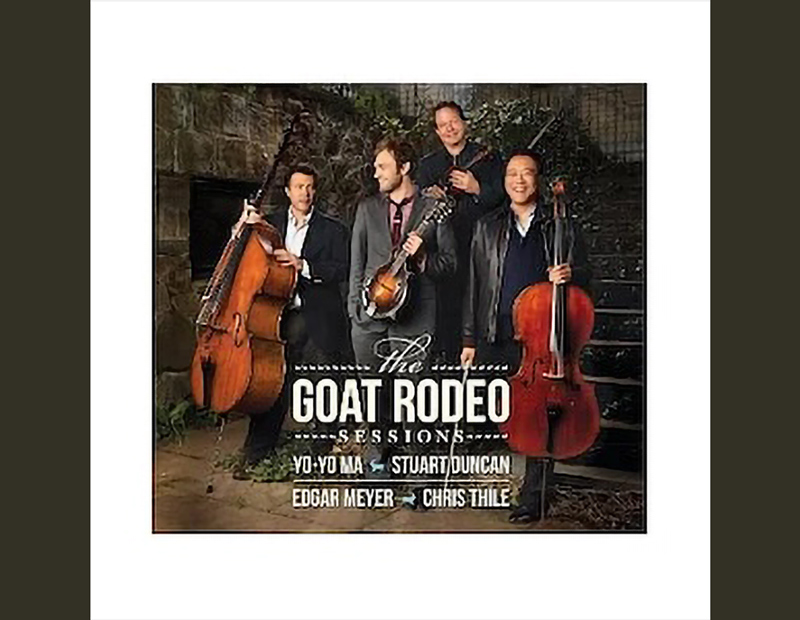
Time for classical music. Listen to Yo-Yo Ma, Chris Thile, and Edgar Meyer’s collaboration, “Bach Trio.” Recorded in a barn, this classical chamber album features a wonderfully spacious soundstage. The TD 404 DD clearly presents a high, deep soundstage with beautifully delineated instrumental forms.
The TD 404 DD distinctly places the cello on the right side of the soundstage, while the mandolin is on the left, its crisp, plucked tones ringing out, positioned relatively higher compared to the cello, creating a nice contrast. The double bass is centrally located. I know these relative instrument positions are created in the mixing stage, but the TD 404 DD faithfully portrays them, and listening to vinyl adds that extra touch of warm, analog smoothness that makes it even more enjoyable!
A Fresh Direct-Drive Deck for a Freshly Opened Record
Let’s try another “fresh” record: “Destination Rachmaninov – Departure,” featuring Yannick Nézet-Séguin conducting the Philadelphia Orchestra. This was my first time receiving a recording conducted by Nézet-Séguin. The piano soloist is Daniil Trifonov. Both are young, talented musicians. Even when performing Rachmaninoff, this younger generation brings a distinct romantic sensibility. Listening to it on the TD 404 DD feels remarkably fresh.
Note: “Destination Rachmaninov – Departure” wasn’t an album I was already familiar with; I was listening to it on the TD 404 DD as a newly unsealed record. What impressions would the TD 404 DD convey?
Musical Layers Reveal a Modern Romanticism
Listening to the first movement of Rachmaninoff’s Piano Concerto No. 2, the opening bell-like tones emerge from a distance, gradually intensifying. The TD 404 DD’s direct and dynamic presentation clearly outlines the piano’s crescendo layers. Subsequently, as the piano cascades into rolling arpeggios, the left hand moves with a deep, solemn tread, responding to the weighty surges of the string section. The cello section’s low, melancholic murmuring seems to reflect Rachmaninoff’s unceasing inner emotional turbulence.
Then the piano solo enters. The TD 404 DD delivers fast, clear, and distinct piano notes. As the music moves into the exquisitely romantic second theme, the gentle melody feels like an embrace. The TD 404 DD conveys a warm tonal palette. The piano finally strides forward with the romantic melody, leading into the coda, where the right-hand ascending notes possess a beautiful shimmer.
Is this solely the merit of the TD 404 DD? Partly, yes, but it’s also thanks to the Supex SDX-2000 MC cartridge and the careful setup by the distributor, S.B. Audio, which allowed the TD 404 DD to perform at its best.
The Allure of Direct Drive, Absent from the U-Audio Editorial Room
Here at U-Audio, we have a suspended-subchassis belt-drive Linn LP-12 Klimax and a rigid belt-drive Elac Miracord 90. Both are belt-drive designs. Listening to the direct-drive TD 404 DD, its more immediate and vivid sonic character is noticeably different from the LP-12 and Miracord 90. After hearing it, I genuinely felt tempted to acquire a TD 404 DD as a third reference turntable.
But desire aside, lacking suitable rack space and dealing with the complexity of three turntables gives me pause. While I often say “only children make choices,” the reality is there’s no room. So, I had to let the TD 404 DD go – this time.
If You’re Bored with Belt-Drive, Direct Drive Might Captivate You
However, the TD 404 DD certainly possesses the distinct character of a direct-drive turntable. Compared to belt-drive models, it offers a more direct and lively musical portrayal. Its vibrant, energetic personality is very appealing. If you’ve been using belt-drive turntables for a long time, give the TD 404 DD direct-drive deck a listen. Its powerful, direct-engaging presence and character are something belt-drive designs simply cannot replicate. If you become captivated, you might find yourself, like me, wanting to add a TD 404 DD to your setup.
Specifications
Thorens TD 404 DD
Type: Analog turntable
Drive System: Direct drive motor
Speeds: 33 1/3 rpm, 45 rpm, 78 rpm
Tonearm: Thorens TP160 J-shaped tonearm (with detachable headshell)
Platter Weight: 3.2 kg (aluminum alloy)
Effective Arm Length: 232.8 mm
Overhang: 17.8 mm
Anti-skating: Yes, spring type
Dimensions: 450 x 160 x 370 mm (WxHxD)
Weight: 12.3 kg