
SoundStage! Review | Siltech Master Crown Series Flagship Cable
Back in 2011, when I was writing for the online publication *6moons*, I had the opportunity to test the most expensive signal cable connected to my system at the time. It was truly astronomical; a pair of 1-meter RCA cables cost $42,000. Yes, it was one of the most luxurious cables in the world at the time, guaranteed to make you gasp. Honestly, even now, thinking back on it still makes me gasp… though perhaps the gasp has lessened slightly now.
As time has passed and I’ve come this far, after listening to many truly high-end cables, I find myself once again delving into the realm of ultra-expensive cables. Even my personal reference-grade cables, without a doubt, are far from the level of the Siltech Master Crown. Need a lot of money? Indeed, precious metals are definitely part of the appeal of these flagship cables; there’s silver and gold involved…
Metal is not just metal.
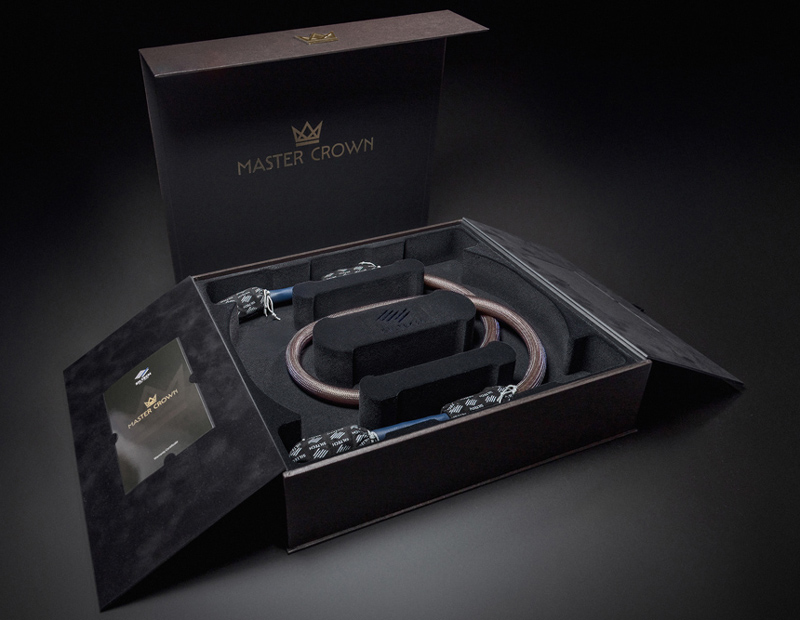
On a clear, misty morning in Blue Mountains, the doorbell rang, drawing me out of my listening room. This was a regular on the local freight line, quite familiar with the heavy cases frequently delivered to ‘Kramer Studios’. With a knowing smile, he struggled to carry another large box, muttering, “Dude, another heavyweight amplifier delivered.” However, this time it wasn’t an amplifier… but something equally substantial. It was a complete set of Siltech’s flagship Master Crown cables. And yes, it really did weigh as much as an amplifier.
Receiving such a luxurious set of cables made me think about the heated debates that expensive cables often spark among audiophiles, especially on forums and social media platforms, where keyboard warriors always remain hidden behind their screens. Regardless of the controversies, the arrival of Master Crown cables prompted me to reflect on the potential impact, or lack thereof, of high-end cables, especially those in this price range, on a system’s musical performance.
Cables, regardless of price, conductor, or construction, cannot add sonic character to an electrical signal. What well-designed cables can do is “leak less” or “mask less” subtle nuances than less sophisticated designs. In other words, they may “subtract” less from the original signal, while other cables may distort the message. This is before considering factors such as RFI and EMI interference, the effects of different shielding strategies, the interaction of capacitance, resistance, and impedance, connector interface methods, and micro-effects. Of course, even these omissions or suppressions, often subtle, can be key to elevating a system from impressive to extraordinary.
Philosophical discussions aside, once the entire set of signal cables, speaker cables, and power cables were in place, the sound I heard convinced me that, with Master Crown cables, this “omission” is virtually…zero, absolutely none.
Edwin van der Kley Rynveld, CEO and CTO of Siltech, is a metallurgist and an electronics engineer with a master’s degree (other engineers at Siltech also hold doctorates). He knows his field very well. In a recent YouTube video interview with him, Rynveld offered interesting insights into the implications of metallurgy, insulation, materials, and many other aspects.
XLR/RCA Signal Cables: I received samples of both balanced XLR and single-ended RCA configurations. Both cables use Siltech’s highest purity patented S10+ single-crystal pure silver conductor. This conductor metallurgy is the result of rigorous materials science experimentation and development by Rynveld and his team of engineers.
The two S10+ conductors are arranged in a twisted pair configuration and assembled using what Siltech calls a new “balanced grounding principle.” This is said to result in improved dynamic range while reducing noise to the lowest level the brand has achieved to date. The conductors of the signal cable are air-insulated within a sheath, which itself is made of a blend of Kapton, Teflon, and silk.
Internal MFD (Magnetic Field Distortion) has been reduced to what Siltech calls “absolutely minimum levels.” CSD (Current Shielding Distortion) has also been reduced, which “minimizes interference between external current and the natural audio signal.” A new term to me in analog cable technology is “cable jitter,” which Siltech claims to reduce to improve zero-crossing distortion, “significantly impacting the audible discernibility of vocals and instruments.”
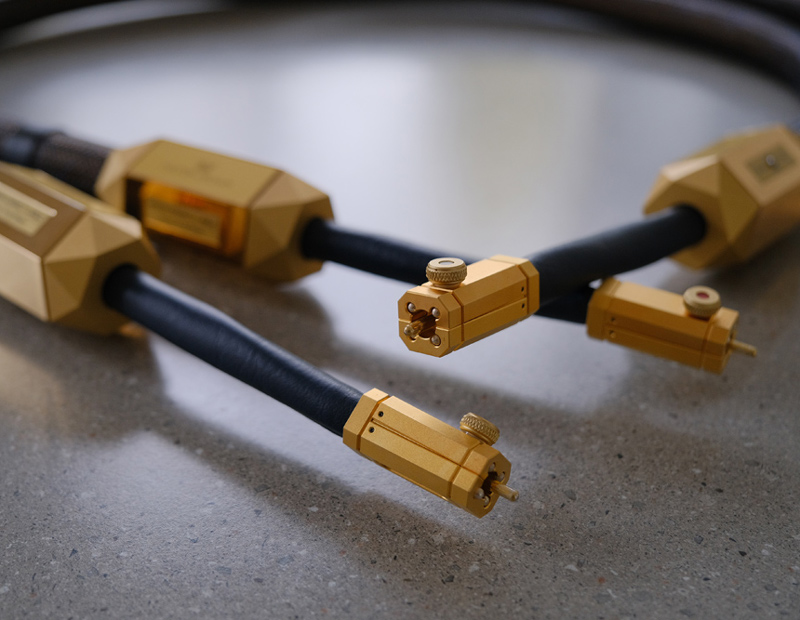
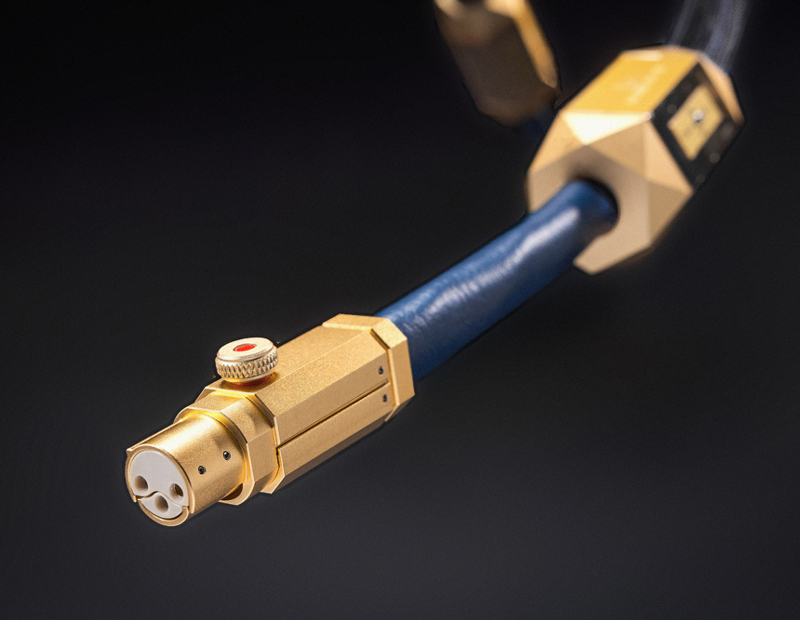
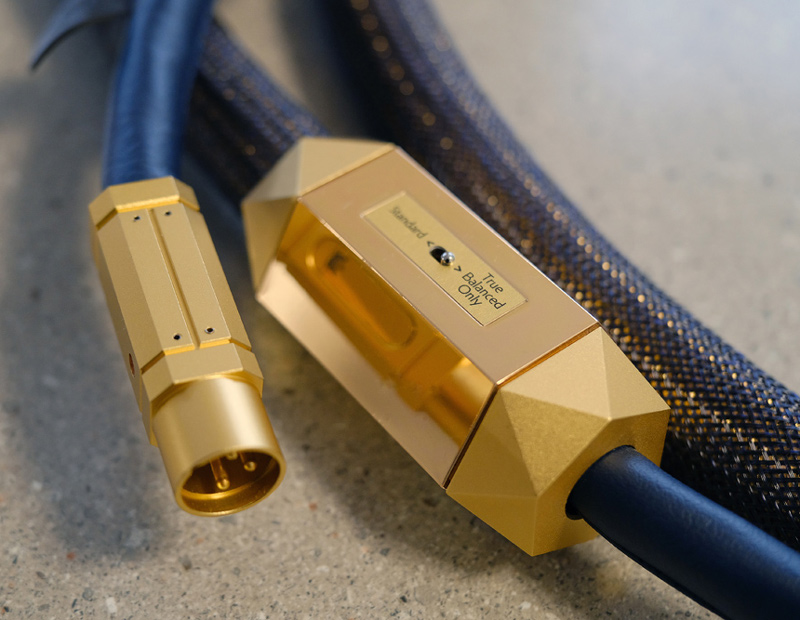
On the RCA cable, a simple grounding switching system is integrated into a large gold-plated casing. A high-quality metal switch allows switching between directional grounding and “floating” grounding with the shield disabled at both ends. The balanced XLR cable offers the same grounding functionality, while adding an option to “optimize the sound of truly balanced equipment” by switching between standard balanced and true balanced. These features are housed in a heavy, robust metal casing, gold-plated, and of exceptional quality. Both XLR and RCA cables use in-house manufactured custom ‘X-tal’ connectors, which can be tightened via a small knob built into the connector (only on the female end for XLR, both ends for RCA) for a better grip on the receptacle. This differs from WBT-style fully locking connectors, and in my experience, it’s a unique approach. These connectors are actually an extension of conductor metallurgy, featuring Siltech’s S10+ single-crystal pure silver pins, plasma-plated with gold. The conductors are pressure-welded to the pins to eliminate undesirable transmission points. Silver solder is then applied at the junction of the conductor and connector for a more reliable connection.
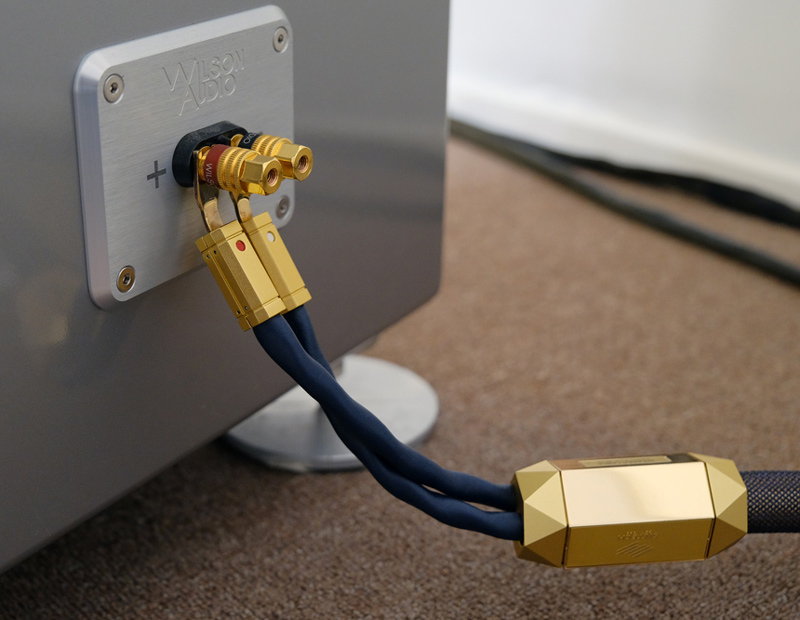
Speaker Cable: The robust Master Crown speaker cable also employs similar technology. The rather heavy speaker cable contains a strand of six large-diameter S10+ solid single-crystal silver conductors arranged in a perfectly symmetrical hexagonal structure. Siltech again utilizes its MFD and CSD technologies to minimize distortion and maximize dynamic range. The custom-designed single-crystal silver Y-type connector is plasma-plated gold. Siltech’s marketing claims these cables can handle electrical signals from 10 kilowatts down to as low as 8 femtwatts (as cited in their “0.000000000000008 watts!”). The sheath consists of Kapton, Teflon, and air insulation, including “wide-spectrum” shielding.
Similarly, a large gold-plated metal block is used here, incorporating a nameplate engraved with the cable serial number and the ‘Master Crown’ logo. Like other products in the Master Crown cable series, the ends are wrapped in dark blue leather.
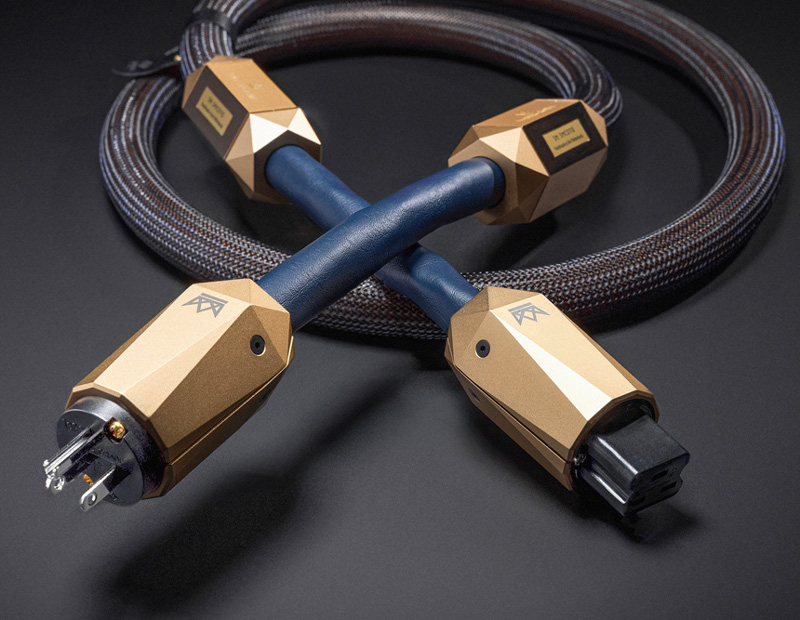
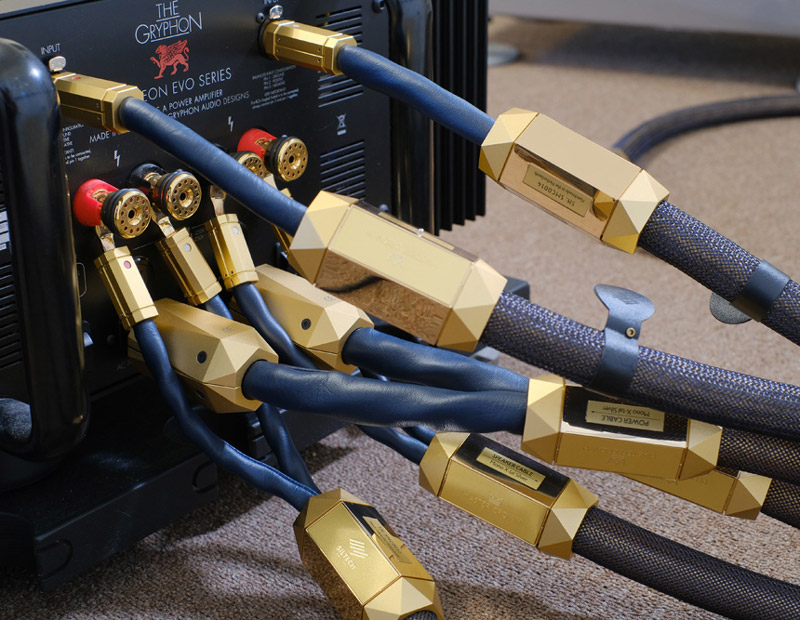
AC Power Cords: AC power cords are a testament to the cable’s construction. Physically, they are thick and heavy. Structurally, Master Crown power cords utilize ‘Siltech Special Multi-Core’ wire made of S10+ single-crystal pure silver and G9 silver-gold alloy, in a large-scale configuration of 18 conductors. The use of sterling silver extends to the AC plug’s connection pins/contacts. A meticulously designed grounding system eliminates the “floating” grounding techniques some audiophiles claim are beneficial to sound, as Siltech mentions in its marketing materials.
Furthermore, Siltech’s research shows that magnetic leakage, even those outside the audible range, causes minute distortions. This phenomenon occurs within a narrow frequency band during high/peak current extraction and, while not directly related to music, can affect nearby electronics and signal cables. Siltech uses advanced COMSOL Multiphysics simulation software and what they call “the world’s most advanced measurement equipment” to study these aspects of the AC power cord’s electrical behavior to “minimize the effects of these peak current distortions.”
The Master Crown AC power cord maintains the same level of build quality as its siblings, featuring leather-wrapped cable ends and gold-plated metal accents adorned with the Master Crown logo/badge and serial number.
When laying out a Master Crown cable system, some cable guidance is required, primarily on the signal cables. From the TotalDAC to the preamplifier, I carefully routed the XLR (and later RCA) cables to the back of the rack without any issues. The locking screws on the RCA plugs, in particular, were excellent, providing a reassuring sense of security – no spout slippage, no sudden disasters, just a solid, confident connection that was implemented flawlessly.
In my system setup, the Gryphon Antileon EVO power amplifier sits between the speakers, on its own dedicated platform. The dedicated circuit’s AC power outlet is about half a meter away. Therefore, the power cord only requires a slight bend, and the speaker wires extend easily, solving the wiring problem.
Royal Ecstasy
So, what does a complete set of cables costing over AU$500,000 (yes, you read that right!) deliver in a system that relentlessly reveals the truth (and, incidentally, provides a very satisfying musical engagement)? (Otherwise, I wouldn’t own it any other way). Well, here’s a cliché that often comes up in this situation—”the veil has been lifted.” Let me tell you, with these cables, I understand why that phrase becomes a cliché (if you know what I mean).
While that old saying is apt, it can also be used to exaggerate the described results. In the case of Master Crown, it’s more than just rhetorical hyperbole. It means that, when used in my audio environment as a near-complete interface system, one of the key advantages of Master Crown cables is their ability to fill in low-level details that are often obscured or fail to deliver precise clarity.
Take, for example, the “Allegro Ma Non Troppo” movement of Prokofiev’s Concerto No. 3, recorded on the Mercury Living Presence with Byron Janis and performed by the Moscow Philharmonic Orchestra under the baton of Kirill Kondrashin. The Master Crown cable reveals an immense amount of low-level detail from the piano keys, as well as excellent tonal balance across the entire range. However, its presentation is perfectly in harmony with the music itself. In other words, the Master Crown doesn’t offer unnecessary display or analysis, but rather transmits the signal with unwavering precision and fidelity.
In the title track from the album *Heartland*, a brilliant collaboration between Australian Aboriginal artist William Barton and violinist Veronique Serret, the melodic contrast between the didgeridoo and violin is stunning. Barton’s didgeridoo pulsates with authority and low-frequency extension. Simultaneously, the Master Crown cable precisely reveals the most subtle details of the violin, accurately showcasing Serret’s expressive nuances. Barton’s breath before entering the performance is rendered with astonishing realism, even as Serret plays with her signature passionate intensity. Her vocals soar at the end of the song, exhibiting a seemingly boundless dynamic range.
The Master Crown cable’s high-frequency extension is exceptional. In Trio Elf’s “Stadium” from the album *MusicBoxMusic*, the solo piano introduction showcases captivating harmonic decay and an incredibly realistic tone. When the acoustic bass joins, it provides a tight, sharp, aggressive sound with zero-note reverberation, while retaining the instrument’s natural diffusion.
The Master Crown cable’s rich low-level detail makes acoustic guitar performance a delight. In Doug McLeod’s “My Black Pony” from the album *Whose Truth, Whose Lies?*, his steel-string fingerpicking is rendered with exceptional precision. Every subtle dynamic nuance is fully revealed, yet without exaggeration. The accompanying acoustic bass is similarly nuanced, possessing realistic weight and speed. Oh, and when that kick drum joins the fray… that’s real, raw power, complete control and directness.
I was also blown away by the scale, power, and energy of Rage Against The Machine’s iconic self-titled album, *Bullet To The Head*. It’s an amazing rock recording, mixed by the unparalleled Andy Wallace and mastered by the legendary Bob Ludwig. Few rock albums convey the ferocity, power, and “presence” of the instruments like this production. The short bass solo at the end is a superb example of how to record an electric bass with impact and tightness. Then, when the song’s climax comes in a frenzy, man, the sheer chaos of this beast’s dynamics is unleashed without reservation. With Master Crown cables, your equipment’s signal transmission is truly maximized.
Conclusion Okay, now it’s time to summarize the most expensive cables I’ve ever reviewed, and I have reviewed some expensive stuff. I understand, I know what will happen. There will be keyboard warriors spreading condescending anger, moralists accusing it of indulgence, and the rage of those who control your finances, who will laugh and deny.
That’s okay. You know why? The Master Crown cable system is for those who are not only fortunate enough to afford this luxury (I wish I were one of them), but also for those who have the passion and courage to pursue their audio ambitions. They are for those who yearn to climb to the top, where the air is thin. They are for those who will find themselves immersed in deep listening, because that’s what these cables inspire. They will savor the nuances, the control, the scale, and the vivid soundscape—all products of deeply invested engineering. Those lucky ones are not detractors…they are ecstatic.
I have almost no doubt about the uncompromising fidelity of the Siltech Master Crown cables. The entire system delivers a wealth of signal quality that only a true monarch can provide. Yes, the Siltech Master Crown is a kingly system, a straight flush in the realm of top-tier cable interfaces.
Equipment Used
Speakers — Wilson Audio Alexia V, Axis Loudspeakers VoiceBox S (near-field monitoring), Vermouth Audio Little Luccas Mk.II Limited Edition, Atacama stands
Power Amplifier — Gryphon Audio Antileon EVO
Preamplifier — Supratek Cortese, Totaldac d1-triunity (occasionally direct to power amplifier)
Source — Digital: 432 EVO Aeon Mk.3 Reference Music Server/Roon Core, Yamaha CD-S2100 turntable, Totaldac d1-triunity DAC.
Analog: Transrotor Crescendo turntable with Konstant Studio controller, Reed 1X tonearm with upgraded internal wiring, Shelter Harmony cartridge, The Funk Firm Houdini cartridge decoupling unit, Supratek Cortese & REDGUM Audio RGPH2 phono stage
Processor — DEQX PreMate (one of the setup/occasionally used)
Cables — VYDA Laboratories Orion Silver Reference HFC signal and speaker cables, PSC Audio custom XLR, Vermouth Audio Reference cable system, Tubulus Concentus USB
Speaker racks — SGR Audio Statement MODEL V, Aspire Audio Belgravia amplifier platform (custom-made for Gryphon Audio Antileon EVO), Stereotech Aluminar Dark 3-tier rack
Acoustic treatment — Vicoustic Multifuser Wood, Wavewood Ultra, Cinema Round Premium and Super Bass Extreme
Miscellaneous — Silent Angel Bonn N8 Pro network switch, GigaWatt PF-1 EVO power strip, Les Davis Audio Viscoelastic CLD discs, Voodoo Cable Iso-Pods, Bocchino Audio Mecado, VRC record cleaning system, and various other accessories