
SoundStage! ULTRA Review | Siltech Royal Single Crown Speaker Cable
In this month’s magazine, I devoted considerable space to my thoughts on certain products in the world of high-end audio, without dwelling too much on sound quality, although that’s clearly the most important factor when choosing audio components. However, there are many more factors to consider than just sound quality.
While price isn’t the deciding factor here, once a component reaches a certain level of luxury, it’s no longer just about music reproduction. My neighbor Ron put it most succinctly: “That’s good stuff.” He might be talking about a turntable, a knife, a motorcycle—basically anything impressively well-made beyond its primary purpose.
In that review, I introduced the Siltech Royal Single Crown speaker cables and explained how they influenced my perception of luxury. But regardless of its appearance, its feel, or its reputation, such a product must fulfill its intended function to a degree commensurate with its price and aspirations. If the sound quality falls short, it’s all for naught.
The Siltech Royal Single Crown speaker cables aren’t cheap. The 3-meter pair I tested retails for $33,105. This is no small sum, but the Royal Single Crown cable is far from Siltech’s most expensive. The price increases dramatically as you move up the Royal Crown range. A pair of the same length Royal Double Crown costs $55,635, while the Royal Triple Crown version reaches a staggering $115,245.
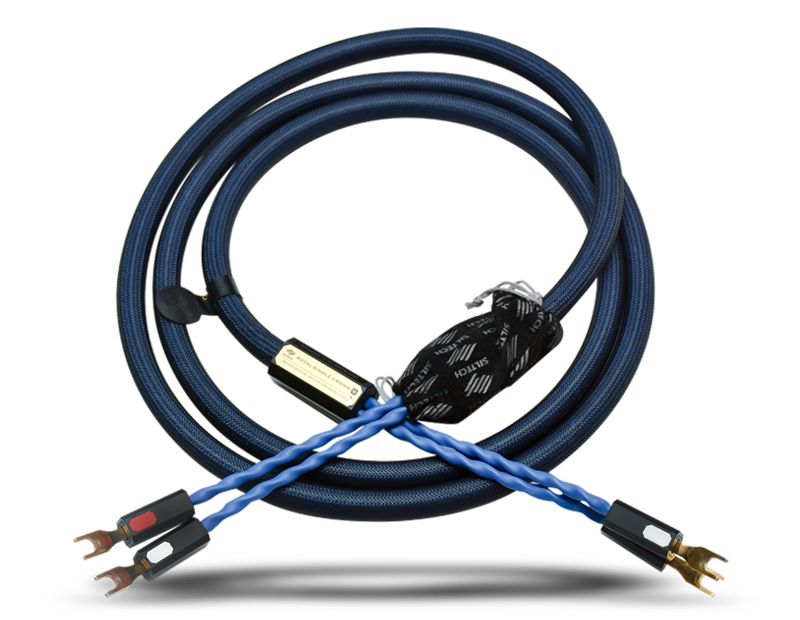
But commensurate with its price, the Royal Single Crown series combines all of Siltech’s advanced technology in an elegant package. Each cable in the Royal Single Crown series contains six conductors made from Siltech’s top-tier materials. These conductors are made from the company’s tenth-generation conductor material, S10 Monocrystal Silver. Siltech has long championed the use of silver in its cables, initially using gold to fill microcracks found in alloyed silver. However, the S10 Monocrystal Silver conductor is itself a long crystal, eliminating the need for this method. Siltech claims their S10 Monocrystal Silver conducts better and has less distortion than ordinary silver wire. The S10 single-crystal silver conductor’s insulation is a combination of Teflon and Kapton. The conductor is wound in a hexagonal configuration. This geometry also creates additional air gaps, further enhancing insulation.
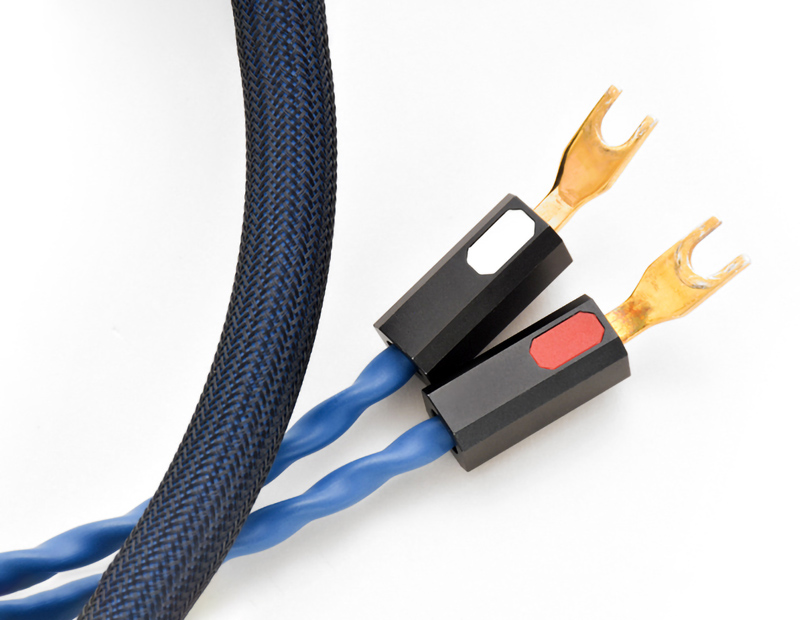
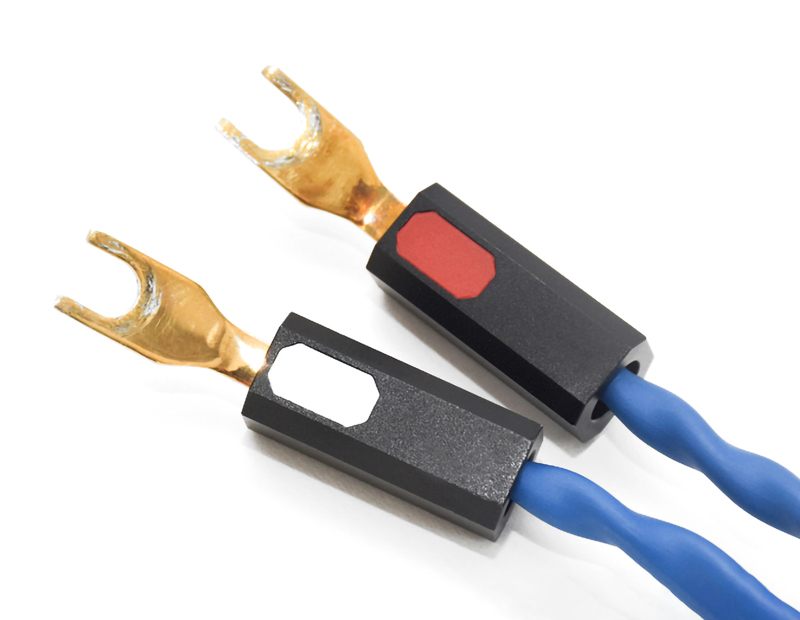
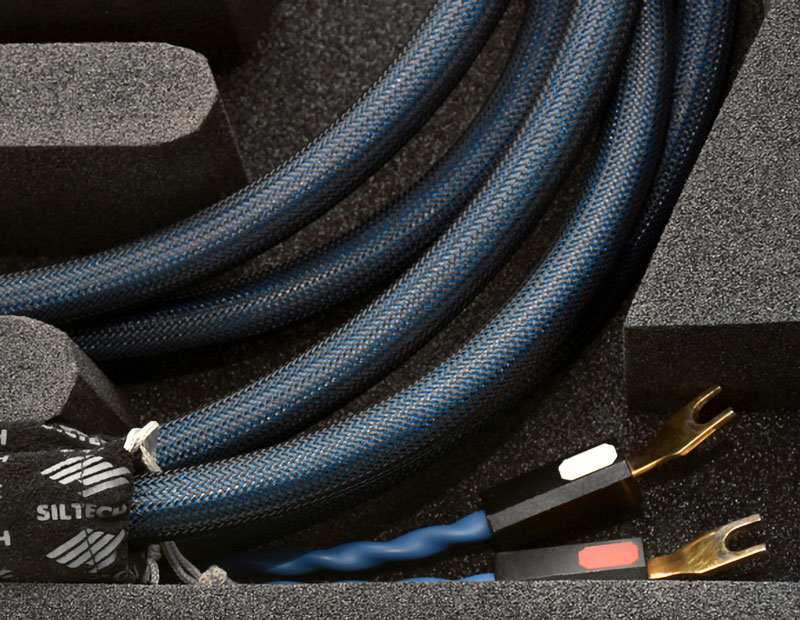
My review sample came with Siltech’s proprietary SSP009 Y-type connectors (spade), made from the company’s G9 silver-gold alloy. These are thick, robust connectors—real, reassuring connections. Extensive use has resulted in some wear on the metal surface, exposing the underlying alloy. A closer inspection revealed a small amount of iridescent oxidation, which I found quite appealing.
Siltech places great emphasis on shielding. Their hexagonal geometry, combined with Kapton and Teflon insulation and a floating shield, helps reduce electrical noise. The aforementioned internal air gaps physically dampen the cable, further reducing interference from mechanical vibrations.
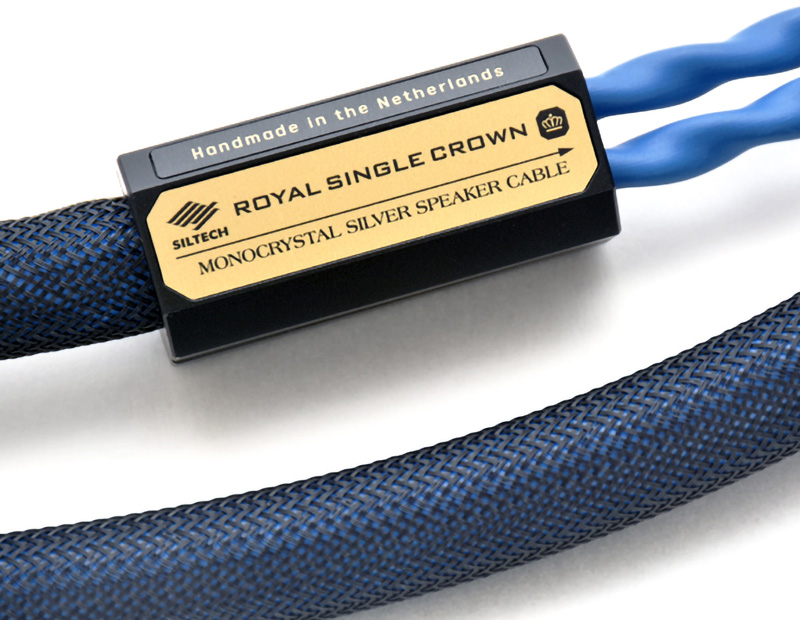
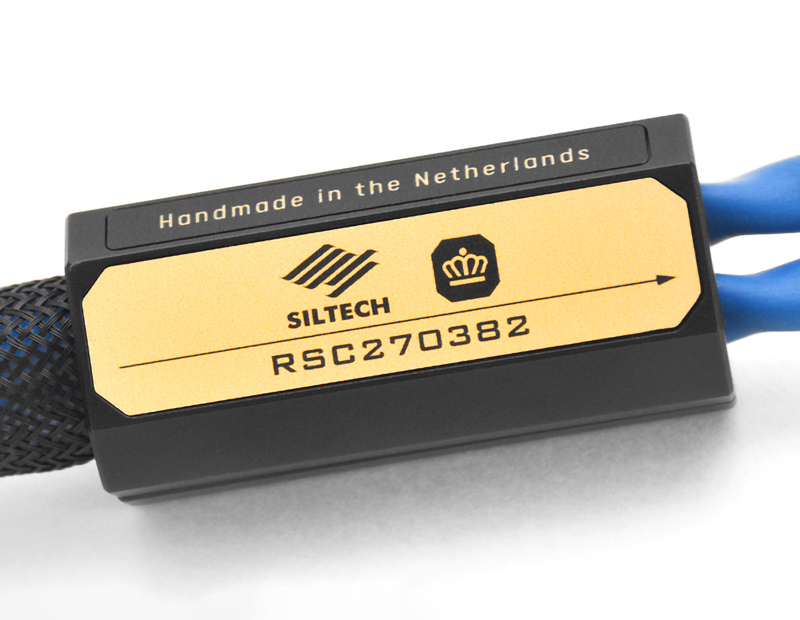
These cables are aesthetically pleasing. As I mentioned in my review, the Royal Single Crown speaker cable exudes luxury. The outermost layer wrapping the entire cable is tight, smooth, and textured. The construction and craftsmanship are flawless. The metal junction box features a beautiful anodized finish and smooth machining, and the heat-shrink tubing leading to the Y-connectors is applied very neatly.
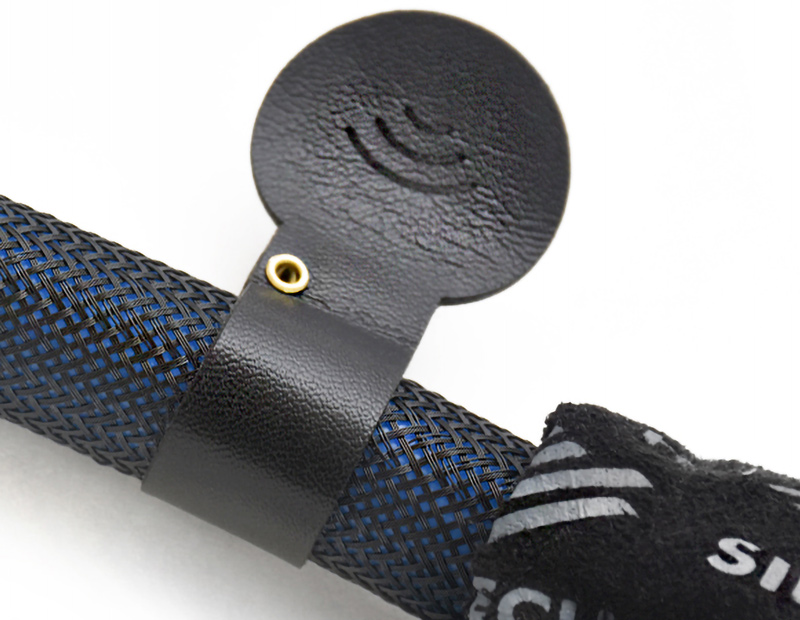
It seems there’s a huge family-run industry dedicated to manufacturing counterfeit Siltech cables; imitation is the most sincere form of flattery, right? Siltech recognizes the prevalence of counterfeit cables and has implemented several measures to add watermarks to its cables to ensure authenticity. Siltech partnered with NFC technology leader Selinko to equip each cable with an NFC tag containing a unique digital ID, verified when the cable is registered with the buyer.
This NFC tag can be scanned using the Siltech smartphone app to easily identify genuine Siltech cables, providing assurance for both retail and resale buyers.
The cable itself is quite flexible. I found it easy to route the cable around the rack; the tightly braided sheath helped it glide over obstacles. The cable loses some flexibility after branching off and leaving the junction box. It’s actually quite stiff near the plug, which seems counterintuitive, but it is. Overall, however, the Royal Single Crown speaker cable is surprisingly easy to handle. It is heavy, though, so you need to ensure the sockets on your components and speakers are sturdy enough to support its weight.
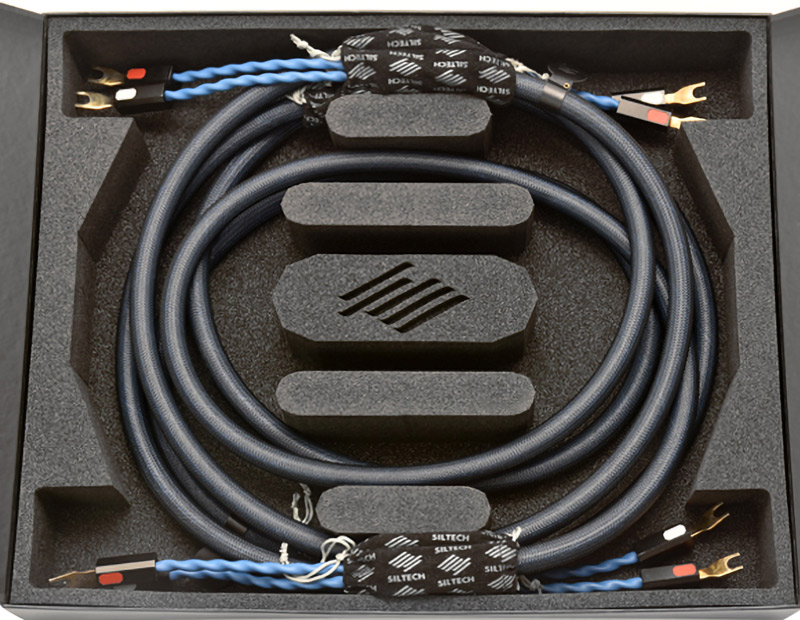
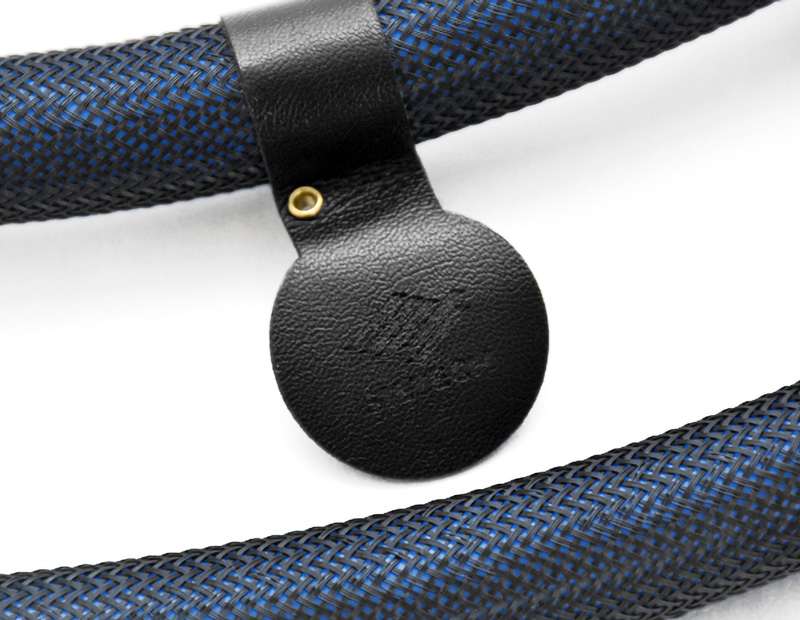
When moving the cable in and out of the rack for comparison and photography, I was very grateful for the cloth sleeves Siltech provided to protect the junction box. Without these sleeves, the heavy junction box would either have been scratched or could have damaged the floor or other equipment.
I used the Royal Single Crown cable specifically with Bowers & Wilkins 805 D4 Signature speakers, driven by my Hegel Music Systems H30A amplifier. For comparison, I used Crystal Cable Art Series Monet speaker cable.
I was worried that this comparison would make my days more difficult. Back in late 2023, I reviewed and really liked Monet speaker cables, and I’m still using them. Crystal Cable and Siltech are sister companies, both under International Audio Holding, so there might be some technological overlap. The Art Series Monet uses Infinite Crystal Silver conductors, while the Royal Single Crowns are based on S10 Monocrystal Silver conductors. I don’t want to break down the lineage of these two silvers, but judging from the marketing copy on both brands’ websites and their close corporate relationship, their craftsmanship and advantages seem similar. Therefore, I expected the final sound quality to be somewhat similar.
Now it’s time to sort it all out. I plugged the cables into the system and connected them. It took me longer than expected to organize them, planning their paths to make them look symmetrical and elegant. Siltech cables make me want to put that effort into them.
Upon receiving the cables, I initially gave them to my neighbor Ron, who helped me burn them in for a week, so the Royal Single Crown cables were all ready to use. I initially expected to struggle to discern the differences between the Siltech cables and my Monets, but that wasn’t the case. The difference between the Crystal Cable Monets and Royal Single Crown cables was immediately noticeable.
Human Touch
The Bowers & Wilkins 805 D4 Signature speakers are spatial monsters. In my room, these speakers delivered the most accurate, realistic, and holographic soundstage I’ve ever experienced, easily rivaling the 801 D4 Signatures that amazed me last year. The 805 is an extremely high-resolution speaker, and it certainly helped me a lot in this evaluation.
In short, adding Siltech cables to the signal chain gave the 805 a tighter, more focused soundstage, increased clarity and slightly fuller body in the midrange, and improved depth resolution. These are the basics, but it involves much more. As I typed this, Roon shuffled Miles Davis’s “Pharaoh’s Dance” from *Bitches Brew* (16-bit/44.1kHz FLAC, Sony Music/Tidal), and I had to stop typing to listen. As John McLaughlin’s guitar weaved through the sounds of Chick Corea, Joe Zawinul, and Larry Young’s keyboards, I found myself drawn into this organized world of Brownian motion.
The three keyboards stretched out before me, as clearly defined as ever, but now, with the Royal Single Crown cable in the signal path, their boundaries were sharper, and I could identify their actual physical locations with greater clarity. Continuing to listen to “Bitches Brew,” I first noticed some finger snapping around the three-minute mark. Replaying this section, I turned up the volume on my Meitner Audio MA3 (I love its clear volume control, which I can manage via Roon on my phone) and then played it again.
Siltechs improved the soundstage definition and imaging, while making the treble more relaxed. I heard (and welcomed) the chords unfold along with the fundamental notes. Talk Talk’s “The Rainbow” from *Spirit of Eden* (LP, EMI E1-46977) begins with a sharp, piercing guitar, a technique the band uses to create tension. It’s a balancing act; the guitar has to be harsh, but it can’t mask everything else in the track. Royal Single Crown cables retain that sharpness, but they essentially polish the soundstage by reducing artificiality, adding clarity around the edges.
Listen again into “Eden,” and the guitar becomes even more piercing, whipping out with a room-penetrating finish. Here, I again notice how Siltechs wields a double power; emphasizing the crisp bite of each string edge while removing the slight harshness at the top of the notes. With Siltechs in the signal path, I could hear much louder without any pressure, which enhanced the dramatic, exhilarating musical impact.
Because it was so inspiring, I wanted to linger a little longer on “Eden.” Lee Harris’s muffled snare drum, which runs through much of Talk Talk’s music, leaps forward in the soundstage as a counterpoint to sparse, minimalist melodic passages. I could almost describe in this review how the Royal Single Crown cable reproduces that snare drum sound. With Siltechs, I felt I could almost hear Harris’s drumstick, if not before it hits the drumhead, then at least at that moment. The actual instant of onset, the moment the sound wave fronting, gained a clear sense of movement, an impression that the instrument was actually there.
Siltechs surprised me with a very subtle, charmingly warm quality in the midrange that persisted into the bass and treble. This characteristic, in part, explains how the snare drum achieved its enhanced realism. The integrity and complexity of imaging cannot be conveyed solely by increasing detail; it’s easy to achieve an aggressive and unsatisfying listening experience by overemphasizing detail. The Royal Single Crown cable provides only a very slight boost in the midrange. The re-release of the melancholic, tribally hip-hop track “Road Apples” (LP, MCA 3844804) is always not far from my VPI Prime Signature turntable’s usual stack. “Fight,” alternating between sparse offbeats and all-out fast-paced rock, is a midrange test track that easily degenerates into a chaotic mess.
I found myself leaning back while listening to “Fight,” letting Gord Downie’s infectious vocals wash over me; Siltechs added an extra layer of depth to his sound, a more realistic feel. This fullness of imaging was particularly noticeable on the guitars of Rob Baker and Paul Langlois. Through the Royal Single Crown, I could feel the hiss of guitar harmonics and the abrupt shifts in lead and rhythm. But beyond the rich transients and impact, Siltechs prevented the sound from becoming cold. This effect wasn’t so much about making the sound muddy as I hesitated to call it warm; perhaps a more apt description would be adding a human touch.
After all this, I conclude that the Royal Single Crown is a speaker cable with a wide soundstage, an honest sound, and a human touch. It’s friendly to harsh, shrill music, and looking back, I find myself describing its sound with those slightly shrill records: The Hip, Miles Davis, Talk Talk. Okay, one more. Slint’s *Spiderland* (LP, Touch And Go TG64) is nothing more than distorted guitars and screaming vocals. Yet, it’s an exceptional album defined by the space around the notes, by the unplayed parts. When “Nosferatu Man” hits my head and neck, I find it easy to turn up the volume without feeling suffocated. Siltechs delivers all the rawness of the track, while allowing me to hear the complexity of the guitar through the noise and appreciate the chaotic odd harmonics that contribute to the track’s emotional impact.
Note: There’s no softening of the rough edges. Siltechs takes the high-frequency extension into the stratosphere. Wherever there’s bite and transients, the Royal Single Crowns deliver it mercilessly and absolutely truthfully. That human warmth I mentioned? It’s not achieved through roll-down highs; the high-frequency extension is all there; it’s just managed so well, so coherent, that the result is extremely listenable, almost pleasant.
“Don, Aman,” one of the more listenable tracks from *Spiderland*, is built on a repetitive, booming guitar. It’s not distorted, but the microphone is incredibly close. Siltechs gives it a polished sheen I can almost taste. I want to get closer; I can feel the guitar on my tongue, like sucking on a door key. Royal Single Crowns project that metallic, unsettling guitar without mercy.
However, I want to turn the volume up, turn it up louder, and bring the guitar closer until it’s truly unsettling, both because of the overall volume and because it’s such dark, unsettling music. Royal Single Crowns illuminates the sparse hi-hat, giving it the appropriate shimmer, while adding a sense of space to the metal-hitting drumsticks. It’s a balancing act, with Siltechs acting as the arbiter, conveying all the information, all the meaning and intent, while blocking out any noise or distortion that might cause ear fatigue.
To evaluate Siltechs’ bass performance… I’ve been using two B&W DB2D subwoofers to assist with the 805. While the 805 operates across the entire frequency range, the DB2Ds only engage below the 805’s low-frequency roll-off, but this isn’t a fair test because the lowest frequencies don’t pass through the Royal Single Crown cables. Therefore, I’ve mostly listened to the 805 with the Royal Single Crowns without the DB2Ds. You’ll soon read my review of the 805 D4 Signatures, which will also give you my impressions of the 805 with subwoofers, showing you how closely they reproduce the full 801 D4 Signature listening experience.
But now, I’m surprised by the 805’s independent performance. Siltechs undoubtedly contribute, providing grip and control from the midrange down to the low frequencies. I haven’t used Rush records for testing in a while, but I’ll correct that now. “The Camera Eye” from *Moving Pictures* (LP, Anthem B0022380-01) is one of my all-time favorite tracks, one that even those who dislike Rush might tolerate. Neil Peart’s drums come from afar, like advancing artillery, the bass drum punctuating every phrase. With the Royal Single Crowns, that bass drum reveals all the necessary extension and impact I know is hidden in the grooves of this record.
Meanwhile, the bass is melodic and agile. Geddy Lee’s Rickenbacker bass has a warm, rich tone that is immediately recognizable, as it is dominated primarily by a roar in the midrange. Siltechs allow the high frequencies of Lee’s bass to leap out of the speakers while preserving deep, fast transients. I can hear this in Lee’s rapid legato passages from high to low, and the Royal Single Crowns maintain the tightness and extension of the low frequencies while highlighting the fast legato. What’s most impressive here is the coherence—the continuous projection of Lee’s bass from the speakers, driven by Siltechs. Round, full, and massive, the bass’s presence is so overwhelming it seems to hit you right in the face.
And more.
I maintain my extremely high praise for Crystal Cable Art Series Monet cables. They are neutral, analytical, and exceptionally elegant, like these Siltechs cables. The overall neutrality of the Monets is paramount in this review, making the comparison with Siltech cables a valid test. The Siltech Royal Single Crowns are nearly 50% more expensive than the Monets—a significant leap proportionally, and the actual price increase is even more substantial—but the superiority of the Siltechs is immediately apparent. I had assumed there might be some similarities in their sonic quality, and indeed there are.
The overall neutrality of the Art Series Monets, their fast, insightful characteristics, and their coherence and imaging are undoubtedly part of the sonic character conveyed to the Royal Single Crowns family. However, Siltech adds a very captivating quality to the midrange, enriching the form of instruments and vocals in a way that Monets cannot quite match. I noticed other improvements at the high and low frequencies, such as better definition that makes the wedge array of bass and drums more focused, and clearer, sharper treble that provides more digestible information, especially at higher volumes.
Like a refreshing spring. The Siltech Royal Single Crown is an excellent speaker cable, no certification needed. While there may be better-sounding products moving up the Royal Crown range, I would be surprised how much better it could be. When I requested this review from Siltech, I specifically asked for the lowest tier of their product line that encompasses all their top-tier proprietary technologies. I’m willing to assume that this cable occupies the best position at the inflection point of Siltech’s price-performance curve.
My God, how I wish I were right, because these cables are very expensive. My judgment resists considering speaker cables that are more expensive than this. Nevertheless, these cables stand out for their inherent advantages, combining exceptional sound, impeccable craftsmanship, and an understated luxury. Of course, it would be presumptuous of me to claim that the Royal Single Crown speaker cables are a bargain. No, that would be absurd, even offensive; at 33,000, they far exceed the realm of bargains.
The Siltech Royal Single Crown speaker cables are by no means mediocre bargains. They are heirloom-quality products, crafted by artisans using premium materials to achieve the highest possible perfection.
How would you price them?
Related Equipment
Digital Sources: Logitech Squeezebox Touch, Meitner Audio MA3
Analog Sources: VPI Prime Signature, European Audio Team Fortissimo S Turntable; European Audio Team Jo N°8, DS Audio DS 003 Cartridge
Phono Amplifiers: Aqvox Phono 2 CI, Hegel Music Systems V10, EMM Labs DS-EQ1, Meitner Audio DS-EQ2
Preamplifiers: Hegel Music Systems P30A, Meitner Audio PRE, Simaudio Moon Evolution 740P
Power Amplifiers: Hegel Music Systems H30A, Balanced Audio Technology REX 300
Integrated Amplifiers: Hegel Music Systems H120, Eico HF-81
Speakers: Focus Audio FP60 BE, Aurelia Cerica XL, Totem Acoustic Sky Tower, Bowers & Wilkins 805 D4 Signature
Subwoofer: Bowers & Wilkins DB2D (2) Speaker cables: Audience Au24 SX, Nordost Tyr 2, Crystal Cable Art Series Monet
Signal cables: Audience Au24 SX, Furutech Ag-16, Nordost Tyr 2, Crystal Cable Diamond Series 2
Power cables: Audience FrontRow, Nordost Vishnu
Power processor: Quantum QBase QB8 Mk II
Accessories: Little Fwend tonearm lift, VPI Cyclone recorder